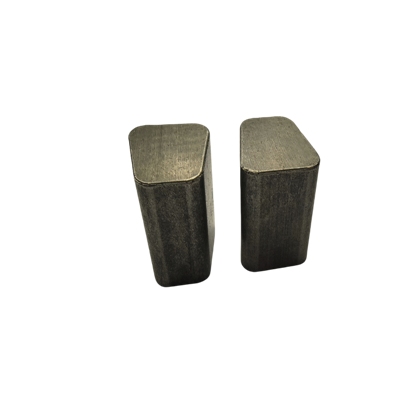
Soft Magnetic Composite (SMC) represents a groundbreaking technology poised to revolutionize electrified applications. By encapsulating iron particles with an insulating material, SMCs offer high resistivity and minimal eddy current losses, promising a transformative impact on various industries. By adding an electric current to a carefully designed component made with SMC, an electromagnetic field is created. They are crucial for various applications, such as transformers, alternators, and inductors, where their magnetic properties are essential for efficient operation.
Benefits of Soft Magnetic Composite(SMC)
Flexibility
SMC exhibits isotropic magnetic behavior, making it ideal for three-dimensional (3D) magnetic paths, particularly in AC applications. Its flexibility allows for innovative circuit and motor core designs, resulting in smaller, lighter electronic products. Besides, it is a versatile material that can be molded into various shapes and sizes, allowing for the customization of components to meet specific design requirements.
Cost Reduction
Utilizing powder metallurgy, an eco-friendly technology, SMC helps reduce manufacturing costs and time. Furthermore, eco-friendly powder metallurgy technology in SMC production aligns with modern sustainability goals. This reduces the environmental impact of manufacturing and can result in cost savings through compliance with environmental regulations and reduced waste disposal expenses.
Energy Loss Reduction
The insulating layers in SMC materials significantly reduce eddy current losses, improving energy efficiency, especially in high-frequency applications. This can lead to long-term cost savings for end-users due to reduced power consumption and enhanced performance.
Low Noise
SMC components generate minimal noise due to their low loss characteristics. This attribute ensures a quieter and more comfortable operating environment, especially in settings where reduced noise pollution is essential.
Time Efficiency
SMC components are known for their ease of assembly, which streamlines the manufacturing process and reduces assembly time. This increased efficiency contributes to overall production time savings, enabling manufacturers to meet production deadlines more effectively and cost-efficiently.
-
![Soft Magnetic Composite]() Soft Magnetic CompositeSoft Magnetic Composite(SMC)applicatied to robotic dog joints and axial motor.
Soft Magnetic CompositeSoft Magnetic Composite(SMC)applicatied to robotic dog joints and axial motor. -
![Stator Spacer]() Stator SpacerStator spacer,The parts of pole shoes; it is frequently detachable from the pole shank in a large motor.Stator spacer consist of soft magnetic composition powder Compression molding.
Stator SpacerStator spacer,The parts of pole shoes; it is frequently detachable from the pole shank in a large motor.Stator spacer consist of soft magnetic composition powder Compression molding. -
![SMC Magnet Yoke]() SMC Magnet YokeSMC Magnet Yoke is a yoke made of SMC(soft magnetic composite)material. The working principle of the magnetic yoke is based on the law of flux continuity and Ohm's law. When a magnetic field acts on
SMC Magnet YokeSMC Magnet Yoke is a yoke made of SMC(soft magnetic composite)material. The working principle of the magnetic yoke is based on the law of flux continuity and Ohm's law. When a magnetic field acts on -
![SMC Yoke Stator Core]() SMC Yoke Stator CoreSoft magnetic stator core is integrally formed by several teeth and a stator yoke (YASA second generation yoke split winding structure). The winding is placed on the teeth, and the magnetic field
SMC Yoke Stator CoreSoft magnetic stator core is integrally formed by several teeth and a stator yoke (YASA second generation yoke split winding structure). The winding is placed on the teeth, and the magnetic field -
![Pole Shoe With Hole]() Pole Shoe With HoleThe portion of the pole piece of an electric machine which faces the armature; it is frequently detachable from the pole shank in a large motor.
Pole Shoe With HoleThe portion of the pole piece of an electric machine which faces the armature; it is frequently detachable from the pole shank in a large motor. -
![SMC For Axial Flux Disk Motor Stator]() SMC For Axial Flux Disk Motor StatorSMC Material for Axial Flux Disk Motor stator
SMC For Axial Flux Disk Motor StatorSMC Material for Axial Flux Disk Motor stator -
![4poles SMC Stator Core]() 4poles SMC Stator Core4poles SMC stator core
4poles SMC Stator Core4poles SMC stator core -
![Somaloy 500/700/1000 Soft Magnetic Composite For Axial Flux Motor]() Somaloy 500/700/1000 Soft Magnetic Composite For Axial Flux MotorThe difficulty in manufacturing the coiled core of the stator of the disc motor is the main reason restricting its application. During the rolling process, there will be the following problems: 1.
Somaloy 500/700/1000 Soft Magnetic Composite For Axial Flux MotorThe difficulty in manufacturing the coiled core of the stator of the disc motor is the main reason restricting its application. During the rolling process, there will be the following problems: 1. -
![Soft Magnetic Iron Core]() Soft Magnetic Iron CoreComposite soft magnetic (Soft Magnetic Composite, SMC) material is a kind of bulk material that is coated with insulating material on the surface of iron powder particles, and then pressed into shape
Soft Magnetic Iron CoreComposite soft magnetic (Soft Magnetic Composite, SMC) material is a kind of bulk material that is coated with insulating material on the surface of iron powder particles, and then pressed into shape -
![Axial Flux Motor Cores]() Axial Flux Motor CoresThe rotor rotates around the stator. The traditional stator core is riveted by silicon steel punching, which is often very heavy, accounting for about 2/3 of the weight of the traditional motor. In
Axial Flux Motor CoresThe rotor rotates around the stator. The traditional stator core is riveted by silicon steel punching, which is often very heavy, accounting for about 2/3 of the weight of the traditional motor. In -
![Servo Motor Rotor Core]() Servo Motor Rotor CoreThe inner rotor of the servo motor is purchased with surface-mounted (SPM) rare earth magnetic tiles, which use an arc-shaped permanent magnet glue to solidify on the surface of the motor rotor
Servo Motor Rotor CoreThe inner rotor of the servo motor is purchased with surface-mounted (SPM) rare earth magnetic tiles, which use an arc-shaped permanent magnet glue to solidify on the surface of the motor rotor -
![Hub Motor Core]() Hub Motor CoreNew energy vehicles and in-wheel motors have become the forefront of technology and popular industries in recent years.
Hub Motor CoreNew energy vehicles and in-wheel motors have become the forefront of technology and popular industries in recent years.


Efficient and convenient
The company has established marketing networks around the world to provide high-quality services to customers in an efficient and convenient manner.
Quality assurance
In terms of quality assurance, the company strictly follows the standards and norms of the industry quality system. Adopt industry-leading testing equipment to ensure product quality and good reputation.
Professional team
We have a team of skilled and experienced professionals who are well-versed in the latest technology and industry standards. Our team is dedicated to ensuring that our customers get the best service and support possible.
Competitive prices
We offer our products at competitive prices, making them affordable for our customers. We believe that high-quality products should not come at a premium, and we strive to make our products accessible to all.
Rich experience
Has a long-standing reputation in the industry, which makes it stand out from its competitors. With over many years of experience, they have developed the skills necessary to meet their clients' needs.
High quality products
We always put customer needs and expectations in the first place, refine on, continuous improvement, to seek every opportunity to do better, to provide customers with their expectations of quality products, to provide customers with the most satisfactory service at anytime.
Soft Magnetic Composite Market Outlook from 2023 to 2033
The soft magnetic composite market size reached US$ 41,303.8 million in 2022. Over the forecast period, soft magnetic composite demand is anticipated to rise at a 9.3% CAGR. Total market value is predicted to increase from US$ 44,459.0 million in 2023 to US$ 1,08,392.0 million by 2033.
|
Attributes |
Key Insights |
|
Soft Magnetic Composite Market Size in 2022 |
US$ 41,303.8 million |
|
Estimated Soft Magnetic Composite Market Value (2023) |
US$ 44,459.0 million |
|
Projected Soft Magnetic Composite Market Revenue (2033) |
US$ 1,08,392.0 million |
|
Value-based CAGR (2023 to 2033) |
9.3% |
The soft magnetic composites (SMCs) market is a constantly changing and dynamic area of the more extensive materials and technology for electrical applications. SMCs are cutting-edge materials with exceptional magnetic properties, making them well-suited for several uses in the electrical and electronic sectors. These materials are essential for developing contemporary electrical devices and systems as they are designed to deliver effective magnetic performance while minimizing energy losses.
Several sectors use the SMC, including power electronics, automotive, renewable energy, and telecommunications. SMCs are becoming increasingly popular in the automotive sector, mainly for usage in electric and hybrid vehicles (HEVs).
Materials that aid in developing energy-efficient technology are in greater demand as the importance of sustainability and energy efficiency grows. In this context, SMCs are essential because they make it possible to design and produce electrical components that are more compact & efficient.
To improve the performance of these materials, continuous research and development efforts are what define the soft magnetic composite market. Investigating new applications in developing technologies and emphasizing customization to satisfy particular application requirements are more industry trends.
Worldwide trends in electrification, renewable energy uptake, and electric mobility developments would all impact the soft magnetic composite industry. Cost competitiveness is a problem that market participants frequently encounter, but the growing need for high-performance magnetic materials nonetheless propels innovation and market expansion.
The Unique Properties Of Soft Magnetic Composites
High Permeability And Low Coercivity
SMCs exhibit exceptional magnetic permeability, allowing them to channel magnetic flux efficiently. This property, coupled with low coercivity, enables precise control and manipulation of magnetic fields, essential for various applications.
Customizable Shapes And Sizes
By powder metallurgy techniques, SMC materials offer unparalleled flexibility in shaping and sizing. Manufacturers can tailor these materials to meet specific design requirements, resulting in intricate and customized components for diverse applications.
Superior Performance At High Frequencies
Unlike conventional magnetic materials, SMCs maintain their magnetic properties even at high frequencies. This attribute makes them ideal for applications demanding rapid magnetic field changes, such as in transformers, inductors, and high-frequency power supplies.
High Material Efficiency And Low Production Energy
SMCs are characterized by high material efficiency, as they minimize waste during production. Additionally, the manufacturing process of SMCs requires relatively low energy consumption, contributing to overall sustainability and cost-effectiveness.
Elimination Of Joining Multiple Laminations
Unlike traditional silicon steel laminated cores, SMCs remove the need for joining multiple laminations by interlocks or welding or glue bonding. Both welding and stacking significantly increase the core loss (heat) generated by the device. This simplifies the manufacturing process, reduces assembly time, and enhances overall reliability by eliminating potential points of failure.
3D Magnetic Flux Pathway
SMC components offer the unique advantage of a 3D magnetic flux pathway. Unlike electrical steel motor cores where the flux path is constrained to the plane of the laminations, SMCs allow for multidirectional flux flow, providing greater design flexibility and efficiency in magnetic circuits.
Lower Overall Core Losses At Higher Frequencies
SMCs exhibit lower core losses, particularly at higher frequencies, compared to silicon steel and amorphous materials. The starting material is an insulated fine ferrous powder, which confines losses to individual particle sizes, resulting in improved efficiency and performance in high-frequency applications.
Potential Applications of Soft Magnetic Composite Applications


AC Motors
Soft magnetic composites are used in the design of alternating current (AC) motors. The powder particles are compacted to form laminations for brushless DC (BLDC) motors.
Renewable Energy
SMCs can be used in the renewable energy sector, particularly for the development of efficient and compact motors for solar energy systems. They can be used in off-board power generation, electric pumps, DC conductors, and compressors.
Electric Vehicles
With the increasing trend towards electrification, SMCs play a vital role in the transition to electric vehicles. They are used in traction motors and other parts of electric vehicles to minimize eddy current losses, improve efficiency, and provide superior performance compared to traditional motor cores.
Rotating Machinery
SMCs have become a viable alternative to steel laminations in rotating machinery applications. They have significantly improved low and medium frequency characteristics, making them suitable for rotating machinery, sensors, and fast switching solenoids.
Recent Advances in Soft Magnetic Composites
SMCs have made significant advances due to the demand for improved magnetic materials across industries. Some of the key advances include:
Multifunctional Coatings
One area of innovation in SMCs is the development of multifunctional coatings. These coatings are designed to enhance the energy, electrical, magnetic, and mechanical properties of SMCs. Various coatings can be applied to SMCs, depending on the shape and material of the layers or ferromagnetic powders. Fiber-based soft magnetic composites have been developed by coating Fe fibers with a thin polymer layer, resulting in a material with excellent magnetic permeability.
Development of balanced properties
Researchers are exploring ways to balance high resistivity, high mechanical strength, and high magnetic properties in SMCs. This involves considering the composition of the core and coating materials, or potentially developing new classes of materials.
One such study investigated the preparation of core-shell structured amorphous SiO2 powders for high-performance SMCs. The process included phosphating, sodium silicate coating, and annealing. Results showed an increase in magnetic permeability and a decrease in core losses after annealing at 773 K.
Compact and powerful electric motors
SMC materials enable the design of innovative, compact, and powerful electric motors that can be tailored to specific applications. Their ability to make nonmagnetic materials magnetic has enabled the development of electric motors. These motors are used in electric vehicles (EVs), solenoids, relays, and more.
Types of Soft Magnetic Composite Materials
Powder Cores
These are the most common type of SMCs and are made by compressing magnetic powder into a solid core shape. Powder cores are often used in inductors and transformers because they have high permeability and low core losses.
Polymer-Bonded SMCs
These materials are made by blending magnetic powder with a polymer binder. Polymer-bonded SMCs have better mechanical properties than powder cores and can be molded into various shapes.
Metal-Bonded SMCs
These materials are made by blending magnetic powder with a metal binder. Metal-bonded SMCs have even better mechanical properties than polymer-bonded SMCs and can handle higher operating temperatures.
Nanocrystalline SMCs
These materials are made by embedding small magnetic particles in a nanocrystalline matrix. Nanocrystalline SMCs have high saturation flux density and low coercivity, making them useful in high-frequency applications.
Avoid Exposure To High Temperatures
Soft magnetic composite materials are highly sensitive to temperature changes, particularly at high temperatures. It is recommended to avoid exposing them to temperatures exceeding 150°C. Constant high temperature exposure can cause the material to break down and lose its magnetic properties.
Keep Them Dry
Soft magnetic composite materials are also sensitive to moisture and can corrode easily. It is important to keep them dry and away from water. Proper storage in a dry environment is critical to ensure the long-term performance of the material.
Regular Cleaning
Soft magnetic composite materials may accumulate dirt, oil, and other contaminants over time. Regular cleaning with a soft cloth or brush can help to remove these contaminants and maintain the material's performance.
Prevent Mechanical Damage
Soft magnetic composite materials are prone to mechanical damage, such as cracking or chipping. It is recommended to handle the material with care during installation and to avoid any impact or stress that can cause damage.
Avoid Exposure To Strong Magnetic Fields
Soft magnetic composite materials are designed to have specific magnetic properties. Exposure to strong external magnetic fields can alter these properties and negatively affect the material's performance. It is recommended to keep the material away from strong magnetic fields.
Soft Magnetic Composite: The Basics
Soft magnetic composite particle
Once insulated, the powder is pre-mixed with compaction lubrication to smooth the way for compaction and ejection from the die. The lube gets removed during heat treating afterward.Soft magnetic composites offer possibilities that simply didn't exist before.With the right SMC material your technology can.
- Run faster
- Consume far less energy
- Become more compact & dense
- Achieve high permeability
- Use higher frequencies
Experience lower core/eddy loss
Definition: Soft magnetic composites are ferromagnetic powder particles ideally coated with a uniform layer of electrical insulating film.Keep in mind that magnetic performance is a function of.
- Alloy system used
- Density of final part (saturation induction and permeability are influenced by density)
- Sintering temperature
- Carbon and nitrogen content after sintering
Soft magnetic composites are compacted just like any other powder metal part. Heated die compaction is often used to promote higher density. As noted earlier: Higher density = higher permeability = higher induction.
Certifications

Our Factory
Highmag Technology (ShenZhen) Ltd is the subsidiaries of AT&M (Stock Code:000969), which is powerful in new material area and completed IPO in Shenzhen Stock Exchange. We are a professional manufacturer of NdFeB magnet, MIM (metal injection moulding) and SMC (Soft Magnetic Composite). We started magnet manufacturing in Taiwan from 1989 and founded ShenZhen factory in 2001. In 2003, the asset restructuring has become a holding subsidiary. During these years, Highmag has performed excellently and received praise from customers for the technology, manufacturing, service, quality, lead time and cost control. Highmag keeps developing new products and new methods and making full use of geographic advantages--Shenzhen, in order to satisfy the wide requirements of customers in various fields.


FAQ
Q: What are soft magnetic composite SMC materials?
Q: What are the properties of soft magnetic composite?
Q: What are the applications of soft magnetic composites?
Q: What are the advantages of soft magnetic composites?
Q: What is the process of soft magnetic composite?
Q: How are Soft Magnetic Composite Materials produced?
Q: How do SMC materials differ from other magnetic materials?
Q: What is the manufacturing process for SMC materials?
Q: What factors can affect the magnetic properties of SMC materials?
Q: What are the typical magnetic properties of SMC materials?
Q: What are the benefits of using SMC materials in electric motor applications?
Q: Are SMC materials expensive?
Q: How can SMC materials be customized for specific applications?
Q: Are SMC materials environmentally friendly?
Q: How durable are SMC materials?
Q: What is the maximum operating temperature for SMC materials?
Q: What is the difference between SMC materials and soft ferrite materials?
Q: What is the difference between SMC and powdered iron materials?
Q: How do SMC materials perform at high frequencies?
Q: Can SMC materials be customized for specific shapes and sizes?
We're well-known as one of the leading smc cores manufacturers and suppliers in China. Please feel free to buy customized smc cores made in China here from our factory. Good service and quality products are available.
Popular Products