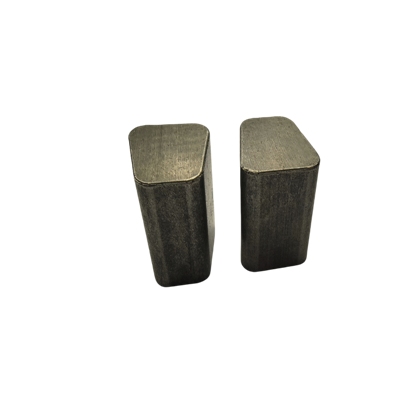
What Is Injection Moulded Magnets
Injection molded magnets are essentially fully dense magnetic powders blended with a variety of polymer base materials. Depending on the combination of magnetic material and polymer selected, a wide range of final material properties are possible.
Benefits of Injection Moulded Magnets
Design Flexibility
One of the most significant advantages of injection molded magnets is their design flexibility. Unlike traditional magnet manufacturing methods, injection molding allows for the creation of complex shapes and sizes, which can be customized to meet specific application requirements. This enables engineers and designers to create unique, high-performance magnetic components tailored to their specific needs.
High Precision and Accuracy
Injection molded magnets offer high precision and accuracy in terms of dimensions and magnetization. The injection molding process ensures that each magnet produced is consistent in size and performance, reducing the need for post-production adjustments and ensuring a reliable end product.
Cost-Effectiveness
Injection molding can be a cost-effective method for producing magnets, particularly when manufacturing large volumes. This process requires fewer secondary operations and less material waste, resulting in lower production costs. Additionally, the ability to produce complex shapes in a single step can reduce assembly costs and streamline the production process.
Wide Range of Materials
Injection molded magnets can be made from a variety of magnetic materials, including hard ferrite, neodymium-iron-boron (NdFeB), and samarium-cobalt (SmCo). This versatility allows manufacturers to select the most suitable material for their specific application, optimizing the performance and longevity of the magnet.
-
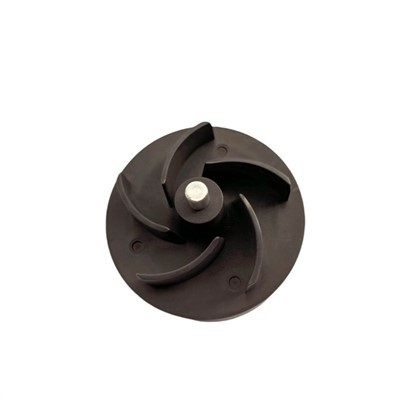
![Water Pump Impeller]() Water Pump ImpellerAn impeller is a rotating iron or steel disc with vanes in a centrifugal pump. Impellers transfer energy from the motor that drives the pump to the fluid being pumped by accelerating the fluid
Water Pump ImpellerAn impeller is a rotating iron or steel disc with vanes in a centrifugal pump. Impellers transfer energy from the motor that drives the pump to the fluid being pumped by accelerating the fluid -
![Plastic Bonded Ferrite]() Plastic Bonded FerritePlastic bonded ferrite is also called injection molded ferrite. It is processed by injection molding from ferrite powder and thermoplastic resin (PA6/PA12/PA66/PPS). Injection molded ferrite is an
Plastic Bonded FerritePlastic bonded ferrite is also called injection molded ferrite. It is processed by injection molding from ferrite powder and thermoplastic resin (PA6/PA12/PA66/PPS). Injection molded ferrite is an -
![Water Pump Impeller]() Water Pump ImpellerA water pump impeller is the rotating part or steel disc with blades in a water pump. It transfers energy from the motor driving the pump to the pumped liquid by accelerating the fluid radially
Water Pump ImpellerA water pump impeller is the rotating part or steel disc with blades in a water pump. It transfers energy from the motor driving the pump to the pumped liquid by accelerating the fluid radially -
![Plastic Magnet Rotor]() Plastic Magnet RotorPlastic magnet rotor is a composite material made by hot-melt mixing of permanent magnetic powder and resin polymer (PA6, PA12, PPS) and other compounds. It is manufactured into a plastic magnetic
Plastic Magnet RotorPlastic magnet rotor is a composite material made by hot-melt mixing of permanent magnetic powder and resin polymer (PA6, PA12, PPS) and other compounds. It is manufactured into a plastic magnetic -
![Over-molded Neodymium Magnets]() Over-molded Neodymium MagnetsOver molding magnets:Typically, the magnet or magnet assembly is inserted into the cavity of an injection mold, and the molten plastic material flows around it after closing, completely covering the
Over-molded Neodymium MagnetsOver molding magnets:Typically, the magnet or magnet assembly is inserted into the cavity of an injection mold, and the molten plastic material flows around it after closing, completely covering the -
![Electronic Expansion Valve Magnet]() Electronic Expansion Valve MagnetWhat is an electronic expansion valveThe electronic expansion valve is a throttling element that can adjust the flow of refrigerant entering the refrigeration device according to a preset program.
Electronic Expansion Valve MagnetWhat is an electronic expansion valveThe electronic expansion valve is a throttling element that can adjust the flow of refrigerant entering the refrigeration device according to a preset program. -
![Magnet Overmolding/magnet Insert Molding/Injection Molding Magnets/Over-molded Neodymium Magnets/Injection Molded Magnets]() Magnet Overmolding/magnet Insert Molding/Injection Molding Magnets/Over-molded Neodymiu...Magnet Overmolding/magnet Insert Molding/Injection Molding Magnets/Over-molded Neodymium Magnets/Injection Molded Magnets 1.Magnet Overmolding(Metal insert) 1)metal parts
Magnet Overmolding/magnet Insert Molding/Injection Molding Magnets/Over-molded Neodymiu...Magnet Overmolding/magnet Insert Molding/Injection Molding Magnets/Over-molded Neodymium Magnets/Injection Molded Magnets 1.Magnet Overmolding(Metal insert) 1)metal parts -
![Strong Rare Earth Magnet]() Strong Rare Earth MagnetCommonly referred to as strong magnets, refers to NdFeB magnets. Compared with ferrite magnets, AlNiCo and Samarium Cobalt, its magnetic properties greatly surpass those of other magnets.
Strong Rare Earth MagnetCommonly referred to as strong magnets, refers to NdFeB magnets. Compared with ferrite magnets, AlNiCo and Samarium Cobalt, its magnetic properties greatly surpass those of other magnets. -
![Power Tool Magnets]() Power Tool MagnetsA power tool is a mechanized tool that is powered by a motor or a permanent magnet and driven by a transmission mechanism. It is easy to carry, simple to operate, versatile, safe and reliable.
Power Tool MagnetsA power tool is a mechanized tool that is powered by a motor or a permanent magnet and driven by a transmission mechanism. It is easy to carry, simple to operate, versatile, safe and reliable. -
![Car Grille Actuator Magnet]() Car Grille Actuator MagnetThe sensor is an important part in the car. It mainly plays a role in providing data for the computer to make judgments.
Car Grille Actuator MagnetThe sensor is an important part in the car. It mainly plays a role in providing data for the computer to make judgments. -
![Magnet in ESCL(Electronic steering column lock)]() Magnet in ESCL(Electronic steering column lock)Product name:Magnet in ESCL(Electronic steering column lock)Material: NdFeB magnetic powder + nylon resin (PA12) binderProcessing method: NdFeB magnetic powder is mixed with thermoplastic resin and
Magnet in ESCL(Electronic steering column lock)Product name:Magnet in ESCL(Electronic steering column lock)Material: NdFeB magnetic powder + nylon resin (PA12) binderProcessing method: NdFeB magnetic powder is mixed with thermoplastic resin and -
![High Temperature Magnet]() High Temperature MagnetHigh temperature magnets do not mean that they will not be demagnetized under high temperature conditions. No matter what material the magnet is, there will be a limit temperature, high or low.
High Temperature MagnetHigh temperature magnets do not mean that they will not be demagnetized under high temperature conditions. No matter what material the magnet is, there will be a limit temperature, high or low.


Efficient and convenient
The company has established marketing networks around the world to provide high-quality services to customers in an efficient and convenient manner.
Quality assurance
In terms of quality assurance, the company strictly follows the standards and norms of the industry quality system. Adopt industry-leading testing equipment to ensure product quality and good reputation.
Professional team
We have a team of skilled and experienced professionals who are well-versed in the latest technology and industry standards. Our team is dedicated to ensuring that our customers get the best service and support possible.
Competitive prices
We offer our products at competitive prices, making them affordable for our customers. We believe that high-quality products should not come at a premium, and we strive to make our products accessible to all.
Rich experience
Has a long-standing reputation in the industry, which makes it stand out from its competitors. With over many years of experience, they have developed the skills necessary to meet their clients' needs.
High quality products
We always put customer needs and expectations in the first place, refine on, continuous improvement, to seek every opportunity to do better, to provide customers with their expectations of quality products, to provide customers with the most satisfactory service at anytime.
Injection Molded Magnets Market Overview
The Injection Molded Magnets Market size is expected to develop revenue and exponential market growth at a remarkable CAGR during the forecast period from 2023–2030. The growth of the market can be attributed to the increasing demand for Injection Molded Magnets owning to the Motors, Sensors, Injection Molded Rotor Assemblies, Insert Molded Magnetic Components, Overmolded Magnetic Components Applications across the global level. The report provides insights regarding the lucrative opportunities in the Injection Molded Magnets Market at the country level. The report also includes a precise cost, segments, trends, region, and commercial development of the major key players globally for the projected period.
The Injection Molded Magnets Market report represents gathered information about a market within an industry or various industries. The Injection Molded Magnets Market report includes analysis in terms of both quantitative and qualitative data with a forecast period of the report extending from 2023 to 2030. The report is prepared to take into consideration various factors such as Product pricing, Product or services penetration at both country and regional levels, Country GDP, market dynamics of parent market & child markets, End application industries, major players, consumer buying behavior, economic, political, social scenarios of countries, many others. The report is divided into various segments to offer a detailed analysis of the market from every possible aspect of the market.
The overall report focuses on primary sections such as – market segments, market outlook, competitive landscape, and company profiles. The segments provide details in terms of various perspectives such as end-use industry, product or service type, and any other relevant segmentation as per the market' s current scenario which includes various aspects to perform further marketing activity. The market outlook section gives a detailed analysis of market evolution, growth drivers, restraints, opportunities, and challenges, Porter' s 5 Force' s Framework, macroeconomic analysis, value chain analysis and pricing analysis that directly shape the market at present and over the forecasted period. The drivers and restraints cover the internal factors of the market whereas opportunities and challenges are the external factors that are affecting the market. The market outlook section also gives an indication of the trends influencing new business development and investment opportunities.
Precautions For The Magnet Injection Molding Process



The complexity of magnet molding requires strict control of details at every step. Thus, it is necessary to have a comprehensive understanding of what needs to be paid attention to in the injection molding process to provide a guarantee for the perfect production of magnets.
Temperature Control
To attain the perfect semi-fluid state, the heating temperature must be strictly regulated. Overheating can compromise the magnetic properties of the powder, leading to defects in the final product. The maximum tolerable temperature is determined by the functions of the magnetic alloy powder and the binder. For instance, ferrite powder in nylon 6 or PPS is suitable for the injection molding process at around 180 °C.
Debinding Treatment
Following the molding, the post-molding phase, especially the debinding process, demands utmost precision. Any remnants of the binder can adversely impact the structural and magnetic performance of the finished item. Moreover, the sintering phase needs meticulous monitoring, with factors like temperature, pressure, and duration playing a pivotal role in establishing the final magnetic characteristics.
Anti-Oxidation Measures
Given the sensitivity of magnetic materials, protection against oxidation stands as a key concern. Exposure to oxygen in the air can substantially weaken their magnetic strength. Hence, the molding environment and sintering processes must be calibrated to minimize exposure to oxygen.
Safety Protocols
Lastly, and most importantly, safety is paramount during the injection molding process. Owing to the potential hazards of magnetic materials, which can have serious consequences if inadvertently consumed, it' s essential to equip workers with appropriate protective gear. Furthermore, comprehensive quality inspections of the final products ensure their reliability and efficacy.
Application of Magnet Injection Molding
As a fusion technology of advanced material science and high-precision manufacturing processes, magnet injection molding has left a magnetic footprint in a wide range of industries.
Automotive Components
As the demand for precision manufactured parts has increased dramatically, the introduction of magnetic injection molding technology in the automotive industry has created specialized magnetic parts for sensors, hybrids, and advanced driver assistance systems (ADAS).
Medical Devices
In the medical industry, especially in the manufacturing of medical devices, the magnet injection molding technique is paramount. The high-precision magnetic components produced by this method meet the essential accuracy and quality requirements perfectly suited for critical applications. This is particularly evident in devices used for imaging and diagnostics, such as MRI machines.
Electronics Product
As the technology behind magnet injection molding matures, it has become the preferred method for manufacturing the essential micro-magnetic components found in electronic products. This advancement has propelled the miniaturization trend seen in devices such as smartphones, tablets, and wearable gadgets.
Aerospace
In the aerospace domain, the utilization of magnet injection molding has significantly elevated the sophistication of navigation, communication, and propulsion systems. This technological breakthrough ensures consistent reliability under demanding flight scenarios, contributing to the overarching safety and efficacy of both aerial and space expeditions.
1. Production process
Injection molding permanent magnet: The process is simple, it can be injection molded with various metal and non-metal inserts, and multiple composite moldings can be performed.
Sintered permanent magnets: The process flow is complicated, and assembly with other metal inserts requires additional procedures.
Advantages of injection molded magnetic contrast: Lower production and assembly costs.
2. Magnetic properties
Injection molded permanent magnet: High surface magnetic field performance.
Sintered permanent magnet: The surface magnetic field performance is very high.
Advantages of injection molded magnetic contrast: Stable performance, effectively improving motor performance.
3. Reliability
Injection molded permanent magnet: The product has high toughness, strong mechanical properties, and is not easy to break and chip.
Sintered permanent magnet: The product has high strength, but is brittle and easy to break, chip, and collapse.
Advantages of injection molded magnetic contrast: Greatly increase the service life and reliability of the motor.
4. Dimensional accuracy
Injection molding permanent magnet: Adopt the injection molding method, with high precision, good product consistency, and high operating balance
Sintered permanent magnets: Using the sintering molding method, the product accuracy is poor. When assembled with other inserts, the product operation balance is not high.
Advantages of injection molded magnetic contrast: High product consistency, stable quality, and guaranteed motor quality.
5. Multipolarization
Injection molded permanent magnet: It can be molded into any multi-polar product at one time without reducing the surface magnetism.
Sintered permanent magnets: The coil magnetization method is used, the process is complicated, the more poles the higher the cost, the accuracy is poor, and the magnetism is difficult to control.
Advantages of injection molded magnetic contrast: Greatly improve the freedom of motor design.
Electric motors and drive systems
Injection molded magnets are commonly used in electric motors and drive systems in automobiles, such as electric motors and generatorsin electric vehicles, etc. Magnets in these components are usually used to convert electrical energy into mechanical energy.
Sensors and Actuators
Some sensors and actuators require magnetic components to fulfill their functions, such as position sensors, gear sensors, seat beltsensors, ABS sensors, door sensors, and hydraulic actuators in vehicles.
Electrically assisted systems
Systems such as electric power steering, automatic driver assistance systems, etc. may require injection molded magnets to perform theirspecific functions.
Brake systems
Magnets may also be used in certain brake systems, such as in brake boosters or anti-lock braking systems (ABS).
Vehicle electronics systems
Injection molded magnets may also be used in vehicle electronic systems, such as in engine control units (ECUs) or other electronicdevices to perform specific functions.

How Are Injection Molding Magnets Magnetized
Injection molding magnets can be magnetized in several ways, including.
Electromagnetism
Electromagnetism is the most common method of magnetizing injection molding magnets. An electromagnet is used to apply a magnetic field to the magnet, which aligns the magnetic domains in the magnet and creates a magnetic field.
Permanent Magnetism
Permanent magnetism is the second most common method of magnetizing injection molding magnets. A permanent magnet is used to apply a magnetic field to the magnet, which aligns the magnetic domains in the magnet and creates a magnetic field.
Induction
Induction is a less common method of magnetizing injection molding magnets. An inductive coil is used to apply a magnetic field to the magnet, which aligns the magnetic domains in the magnet and creates a magnetic field.
Heating
Heating is a less common method of magnetizing injection molding magnets. The magnet is heated to a certain temperature, which aligns the magnetic domains in the magnet and creates a magnetic field.
The choice of magnetizing method will depend on the specific application and requirements of the magnet. Electromagnetism and permanent magnetism are the most common methods of magnetizing injection molding magnets, while induction and heating are less common methods that may be used in certain applications.
How Are Injection Molding Magnets Produced In High Volume
Injection molding is a highly efficient and scalable method for producing magnets in high volumes. The process involves several key steps.
Magnet Powder Preparation
A powder of magnetic material, such as neodymium-iron-boron (NdFeB) or samarium-cobalt (SmCo), is prepared. The powder is ground to a fine particle size and mixed with a binder material to create a paste or slurry.
Injection Molding
The magnet slurry is injected into a steel mold under high pressure. The mold has the shape and dimensions of the final magnet product. The mold is then cooled to solidify the magnet material.
Binder Removal
Once the magnets have cooled and solidified, they are subjected to a debinding process to remove the organic binder material. This can be done through solvent extraction, thermal decomposition, or a combination of both.
Sintering
After the binder is removed, the green (unfired) magnets are sintered at high temperatures in a furnace. During sintering, the particles fuse together, densifying the material and significantly increasing its magnetic properties.
Machining And Finishing
If necessary, the sintered magnets may require additional machining to achieve precise dimensions or surface finishes. Machining processes might include grinding, drilling, or cutting.
Magnetization
The finished magnets are magnetized by applying a strong magnetic field, which aligns the magnetic domains within the material and gives the magnet its full magnetic potential.
Certifications

Our Factory
Highmag Technology (ShenZhen) Ltd is the subsidiaries of AT&M (Stock Code:000969), which is powerful in new material area and completed IPO in Shenzhen Stock Exchange. We are a professional manufacturer of NdFeB magnet, MIM (metal injection moulding) and SMC (Soft Magnetic Composite). We started magnet manufacturing in Taiwan from 1989 and founded ShenZhen factory in 2001. In 2003, the asset restructuring has become a holding subsidiary. During these years, Highmag has performed excellently and received praise from customers for the technology, manufacturing, service, quality, lead time and cost control. Highmag keeps developing new products and new methods and making full use of geographic advantages--Shenzhen, in order to satisfy the wide requirements of customers in various fields.


FAQ
Q: The characteristics and applications of injection molded magnets
The polymer binder content in the injection molded magnet is relatively high, so the magnet itself has better corrosion resistance. Generally speaking, there is no need for protection such as surface coating, and the precise size of the injection molded product can be controlled better.
Injection molded magnets are mainly used in some automation equipment, such as DC motor rotors, inverter air conditioner rotors, stepper motor rotors, cooling fan impeller rotors, water pump motor rotors, mechanical buzzers, micro speakers and other motor plastic magnetic rotors.
Q: What are the advantages of injection molding magnets?
Q: What are the challenges associated with injection molding magnets?
Q: Can injection molding be used to produce magnets with graded magnetism?
Q: What materials are used for injection molding magnets?
Q: How does the injection molding process for magnets differ from standard plastic injection molding?
Q: What is the composition of injection molded magnets?
Injection molded magnets are composed of polymer resin and magnetic powder. It is a new type of composite magnetic material. It has a large degree of freedom in shape design, high dimensional accuracy, and performance can be adjusted as required. It can also be integrated with shafts, gears and other accessories, saving procedures and reducing costs. Injection molded magnets have high mechanical strength, complex shapes, and multi-pole magnetization. They are important basic materials in the field of modern science and technology.
Q: How magnets are molded?
Q: What is injection molding process?
Q: What are the 4 stages of injection molding?
Q: What are 3 methods of making magnets?
Q: How can magnets be made artificially?
Q: How can you tell if something has been injection molded?
Q: How to make a magnet without electricity?
Q: What is the best method of making magnet?
Q: Can you make a magnet without using a magnetic material?
We're well-known as one of the leading injection moulded magnets manufacturers and suppliers in China. Please feel free to buy customized injection moulded magnets made in China here from our factory. Good service and quality products are available.
injection moulded magnets, Escl Magnet, largest permanent magnetPopular Products