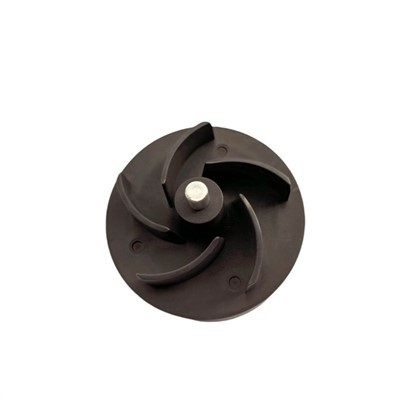
What Is Water Pump Impeller
An impeller is a rotating iron or steel disc with vanes in a centrifugal pump. Impellers transfer energy from the motor that drives the pump to the fluid being pumped by accelerating the fluid radially outwards from the centre of rotation.
Benefits of Water Pump Impeller
Efficient Water Flow
Water pump impellers are designed to create a centrifugal force that pulls water into the center and then pushes it out towards the discharge port. This design allows for efficient water flow and helps to maintain a consistent pressure and flow rate.
Customizable Design
Impellers can be designed in various shapes and sizes, allowing them to be customized for specific applications. This means that the impeller can be tailored to provide optimal performance for a particular pump and system.
Reduced Maintenance
Water pump impellers require less maintenance than other types of pumps. They are generally more durable and have fewer moving parts, reducing the likelihood of wear and tear and the need for frequent repairs.
Energy Efficient
The efficient design of water pump impellers means that they require less energy to operate than other types of pumps. This can result in significant energy savings over time.

High temperature magnets do not mean that they will not be demagnetized under high temperature conditions. No matter what material the magnet is, there will be a limit temperature, high or low.

Plastic Bonded Neodymium Magnets
Injection magnets are made of thermoplastic resins such as PA or PPS and magnetic powders (ferrite magnetic powder, NdFeB magnetic powder, samarium cobalt magnetic powder or samarium iron nitrogen magnetic powder) through mixing
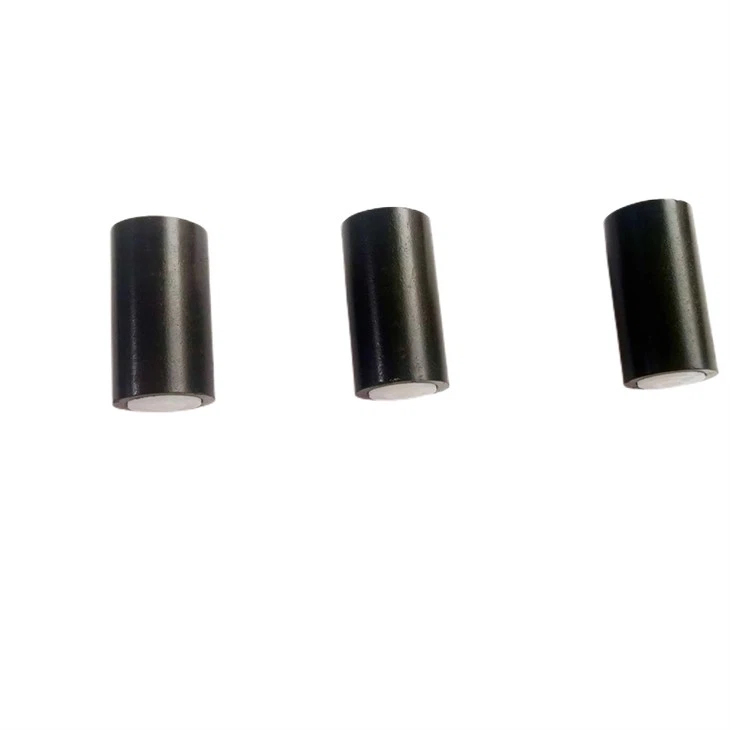
Definition of Brushless DC Pump: A machine that uses DC 4.5V~24V to drive a brushless motor, and the rotation of the brushless motor drives the impeller to rotate, thereby increasing the liquid pressure to achieve the effect of transmitting liquid.

Over molding magnets: Typically, the magnet or magnet assembly is inserted into the cavity of an injection mold, and the molten plastic material flows around it after closing, completely covering the magnet or magnet assembly or covering other than the magnetized surface.

Electronic Expansion Valve Magnet
What is an electronic expansion valve The electronic expansion valve is a throttling element that can adjust the flow of refrigerant entering the refrigeration device according to a preset program.

Commonly referred to as strong magnets, refers to NdFeB magnets. Compared with ferrite magnets, AlNiCo and Samarium Cobalt, its magnetic properties greatly surpass those of other magnets.

A power tool is a mechanized tool that is powered by a motor or a permanent magnet and driven by a transmission mechanism. It is easy to carry, simple to operate, versatile, safe and reliable.

The sensor is an important part in the car. It mainly plays a role in providing data for the computer to make judgments.

Heating, ventilation, and air conditioning (HVAC) is the use of various technologies to control the temperature, humidity, and purity of the air in an enclosed space.
Efficient and convenient
The company has established marketing networks around the world to provide high-quality services to customers in an efficient and convenient manner.
Quality assurance
In terms of quality assurance, the company strictly follows the standards and norms of the industry quality system. Adopt industry-leading testing equipment to ensure product quality and good reputation.
Professional team
We have a team of skilled and experienced professionals who are well-versed in the latest technology and industry standards. Our team is dedicated to ensuring that our customers get the best service and support possible.
Competitive prices
We offer our products at competitive prices, making them affordable for our customers. We believe that high-quality products should not come at a premium, and we strive to make our products accessible to all.
Rich experience
Has a long-standing reputation in the industry, which makes it stand out from its competitors. With over many years of experience, they have developed the skills necessary to meet their clients' needs.
High quality products
We always put customer needs and expectations in the first place, refine on, continuous improvement, to seek every opportunity to do better, to provide customers with their expectations of quality products, to provide customers with the most satisfactory service at anytime.
Types of Water Pump Impellers
Open Impeller
Just as the name suggests, an open impeller is made up of vanes that are open on both sides without any protective shroud. Since they lack support on either side, they are typically weaker and used in smaller, inexpensive pumps that aren' t subjected to significant strain during application. They can, however, handle a certain degree of solid content. Unlike closed impellers, open impellers require a higher NPSH (net positive suction head) to operate without incurring cavitation, damage, or loss of efficiency.
Semi-Open Impeller
Semi-open impellers have a back-wall shroud that provides mechanical strength to the vanes. The opposite side remains open. Aptly named ''semi,' ' they are somewhat in the middle ground between open and closed impellers when comparing efficiency and NPSHr. Semi-impellers are better suited to operating within medium-sized pumps with a small amount of soft solids. However, it' s important to note that the clearance between the vanes and the pump casing needs to be small. If it is too large, then slippage and recirculation may occur.
Closed Impeller
Now that you know what open and semi-open impellers are, you may know by now what a closed impeller is. A closed impeller is enclosed at the back and front and offers maximum strength. These impellers require a low NPSH and provide a more efficient flow of fluids. They are, however, more complicated and more expensive due to their reliance on close-clearance wear rings, which reduce axial loads and help maintain optimal efficiency. Closed impellers are the most popular impeller for large water pumps. They are better suited to transferring clean liquids as they are prone to clogging when they come into contact with solids.
Vortex Impeller
Vortex impellers are not channel impellers like the three impellers we discussed above. In appearance, they are similar to a semi-open type, but vortex impellers have more space in the volute and work differently, too.
Its design is ideal for handling dirty fluids containing debris, dust, and stringy solids. It creates a vacuum that keeps any solids away from the impeller as the liquid is pulled through, which prevents damage to the internal components. Its minimal risk of clogging and solid handling capabilities are beneficial, but the downside is that the efficiency is lower. For this reason, vortex impellers should only be chosen when they have to be.
Cutter Impeller
Like vortex impellers, cutter impellers are also designed to handle solids, but they enable the passing of solids differently. Cutter impellers have sharp-edged, scissor-like vanes designed to grind and obliterate any solids before they enter the water pump. They also share a low efficiency; however, they are the better choice of impeller for the pumping of sewage and other waste.
How To Select The Best Water Pump Impeller
Semi-open impellers
These impellers are very similar to closed impellers. However, they have vanes that are partially exposed. Their design allows a more efficient way of handling solids as well as debris. This is why they are ideal for applications where water gets pumped along with a lot of debris or sediment in it.
Closed impellers
These water pump impeller types are one of the most commonly used. They are used in centrifugal pumps as the design allows a high flow rate and head pressure. They are also very efficient as compared to other types of impellers.
Open impellers
These are the simplest type of impellers. Their vanes are completely exposed. They are not as efficient as closed or semi-closed impellers. However, they are ideal for applications where the water that is to be pumped contains a lot of large solids.
The type of water pump
The type of water pump that one is using plays a significant role in deciding the best impeller type for the pump. This means that if centrifugal pumps work best with closed impellers then that becomes the best choice for those pumps. On the other hand, semi-open impellers are best suited for applications where debris and solids are present, so the decision should be made to keep this in mind.
Head pressure and flow rate
The head pressure as well as the flow rate of an application determine the best impeller as well. If the requirement is a high flow rate and high head pressure then a closed impeller may be the best choice. However, if the requirement is to handle debris and solids then a semi-open impeller would be a better option.
Materials
The kind of materials that are used to manufacture the impeller will also play an important role in this decision. Some materials like cast iron are proven to be more durable and better suited for applications of heavy duty. On the other hand, materials like plastic may be more cost-effective but less durable at the same time.
What Is the Function of an Impeller in a Pump


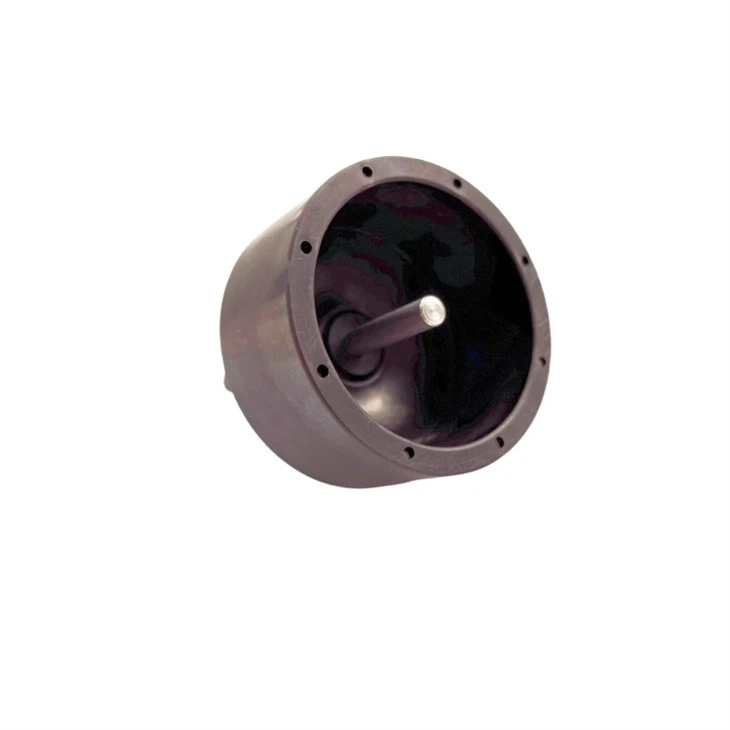
An impeller in a pump serves a critical function in the pumping process. It is a rotating component typically made up of vanes or blades that are used to impart energy to the fluid being pumped. The main functions of an impeller in a pump include:
Fluid Movement
The primary function of an impeller is to move the fluid or liquid through the pump by creating centrifugal force. As the impeller rotates, it draws the fluid in and then propels it outward, increasing the fluid's velocity.
Pressure Generation
By imparting kinetic energy to the fluid, the impeller also increases the pressure of the fluid. This pressure increase is essential for moving the fluid through the pump and overcoming resistance in the system.
Efficiency Improvement
The design of the impeller plays a crucial role in the efficiency of the pump. Well-designed impellers can minimize energy losses and improve the overall performance of the pump.
Handling Different Fluids
Depending on the type of pump and the application, impellers can be designed to handle various types of fluids, including liquids with different viscosities, temperatures, and chemical compositions.
Cavitation Prevention
Proper impeller design can help prevent cavitation, a phenomenon where vapor bubbles form and collapse within the pump, leading to damage and reduced efficiency. The impeller design can help maintain smooth flow and prevent cavitation.
5 Different Manufacturing Processes Of Water Pump Impeller
Casting
Casting is a versatile process suitable for manufacturing impellers of various sizes and complexities. It is particularly advantageous for producing large impellers with intricate internal features. Cast impellers can be made from materials like stainless steel, cast iron, or bronze. This process is commonly employed when high accuracy, complex geometries, and high production volumes are required. Cast impellers are usually machined on the CNC as shown in below video.
Machining
Machining involves removing material from a solid block of metal to create the impeller. This process is suitable for small to medium-sized impellers and is known for its precision. Machining is preferred when high dimensional accuracy and tight tolerances are necessary. It is often used for specialized applications that demand superior surface finishes and tight geometric control.
Welding
Welding is a process where multiple metal components are joined together to form the impeller. This method is typically used for impellers with simple designs and operating conditions that are not excessively demanding. Welded impellers are commonly found in smaller pumps and applications where cost efficiency is important.
Powder Metallurgy
Powder metallurgy involves compacting and sintering metal powders to create a solid impeller. This process is particularly suitable for impellers made from materials that are difficult to cast or machine. Powder metallurgy enables the production of complex shapes and impellers with high strength and dimensional accuracy. It is often used when specific material properties, such as enhanced wear resistance or corrosion resistance, are required.
Additive Manufacturing (3D Printing)
Additive manufacturing, or 3D printing, is an emerging technology that offers design flexibility and the ability to produce complex impeller geometries. It is commonly used for prototyping and small production runs. Additive manufacturing is advantageous when rapid design iterations, customization, or the production of highly intricate impellers are needed. However, it may not be suitable for high-volume production or when specific material properties are critical.
A water pump impeller consists of several key components that work together to effectively move and propel the fluid through the pump system. These components ensure the impeller's functionality and enhance its performance. Let's take a closer look at the main components of a water pump impeller:
Blades or Vanes
The blades or vanes are the primary component of the impeller. They are curved structures attached to the central hub of the impeller. The design, shape, and number of blades vary depending on the specific application and pump type. The blades are responsible for generating the centrifugal force that propels the fluid outward and creates pressure.
Hub
The hub is the central part of the impeller that holds the blades together. It provides stability and ensures that the blades are properly attached to the impeller. The hub is usually a solid structure that connects to the impeller shaft.
Impeller Shaft
The impeller shaft is a rotating component that connects the impeller to the motor. It transmits the rotational power from the motor to the impeller, causing it to spin. The impeller shaft needs to be durable and well-balanced to ensure smooth operation and minimize vibrations.
Impeller Housing
The impeller housing, also known as the volute or casing, is the enclosure that surrounds the impeller. It guides the flow of the fluid and directs it towards the outlet of the pump. The shape of the impeller housing affects the efficiency of the pump system by optimizing the fluid flow and minimizing energy losses.
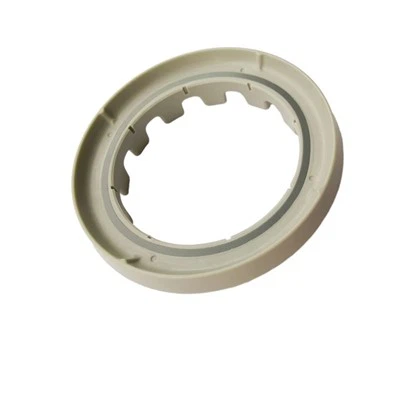
Wear Rings
Some impellers may include wear rings, which are stationary components located on either side of the impeller. Wear rings create a small radial gap between the impeller and the housing, reducing the risk of friction and wear. They help maintain the impeller's efficiency and improve its lifespan.
Tips for Maintaining and Replacing a Water Pump Impeller
Maintaining and replacing a water pump impeller is essential for the optimal performance and longevity of the pump system. By following these tips, you can ensure that your water pump impeller stays in good condition and functions efficiently:
Regular Inspection
Conduct regular visual inspections of the impeller, including the blades, hub, and shaft. Look for signs of damage, erosion, corrosion, or wear and tear. Address any issues promptly to prevent further damage and maintain the impeller's functionality.
Cleaning
Periodically clean the impeller to remove any debris, sediment, or buildup on the blades. Use a soft brush or a gentle stream of water to remove the particles. Be careful not to damage the blades in the process.
Balancing
Ensure that the impeller is properly balanced to minimize vibrations and stress on the pump system. If you notice excessive vibrations during operation, consult a professional technician to balance the impeller if necessary.
Fluid Quality
Use clean and filtered water or fluid in the pump system to reduce the risk of sediment, scale, or abrasive particles that can damage the impeller. Regularly check the fluid quality and ensure proper filtration to protect the impeller from contaminants.
Replace Damaged Blades
If the impeller blades are damaged, worn out, or bent, replace them promptly. Damaged blades can adversely affect the impeller's efficiency and performance. Consult the manufacturer's guidelines or seek professional assistance for proper blade replacement.
Seal Inspection and Replacement
Inspect the seals around the impeller housing for any signs of leakage or wear. Replace worn-out or damaged seals to prevent fluid leakage and ensure the proper functioning of the impeller.
Professional Maintenance
At regular intervals, have a professional technician inspect and service the pump system, including the impeller. They can perform more detailed inspections, clean hard-to-reach areas, and conduct necessary repairs or replacements to keep the impeller in optimal condition.
Consider Manufacturer Guidelines
Follow the manufacturer's guidelines and recommendations for maintenance, cleaning, and replacement of the impeller. These guidelines provide specific instructions tailored to the type of impeller and pump system, ensuring the best possible maintenance practices.
Certifications

Our Factory
Highmag Technology (ShenZhen) Ltd is the subsidiaries of AT&M (Stock Code:000969), which is powerful in new material area and completed IPO in Shenzhen Stock Exchange. We are a professional manufacturer of NdFeB magnet, MIM (metal injection moulding) and SMC (Soft Magnetic Composite). We started magnet manufacturing in Taiwan from 1989 and founded ShenZhen factory in 2001. In 2003, the asset restructuring has become a holding subsidiary. During these years, Highmag has performed excellently and received praise from customers for the technology, manufacturing, service, quality, lead time and cost control. Highmag keeps developing new products and new methods and making full use of geographic advantages--Shenzhen, in order to satisfy the wide requirements of customers in various fields.


FAQ
Q: Replacement Method of Pump Impeller?
The impeller can be also repaired by the repair welding method if does not affect the normal use of the pump.The impeller should be leveled by grinding wheel and static balance test should be done after welding repair.
Axial flow pump blades should be replaced with a full set. Before the replacement of each blade should be weighed, and notice the consistent installation angle as not to cause vibration of axial flow pump operation.
Q: Benefits of Water Pump Impeller?
Q: What is the process of pump impeller?
Q: What is the theory of pump impeller?
Q: What is the function of the pump impeller?
Q: Where is the impeller in a water pump?
Q: How to measure impeller size?
Q: Why is the impeller important in a pump?
Q: Which impeller is best for water pump?
Q: How long does water pump impeller last?
Q: Why is the water pump impeller important in a car's cooling system?
Q: How does the water pump impeller work?
Q: What are the signs of a failing water pump impeller?
Q: Can a water pump impeller be repaired, or does it need to be replaced?
Q: How often should the water pump impeller be inspected?
Hot Tags: water pump impeller, China water pump impeller manufacturers, suppliers, factory, ceramic permanent magnet, powerful neodymium bar magnets, arc segment neodymium magnets, strontium ferrite magnet, flat ferrite magnet, Strong Rare Earth Magnet