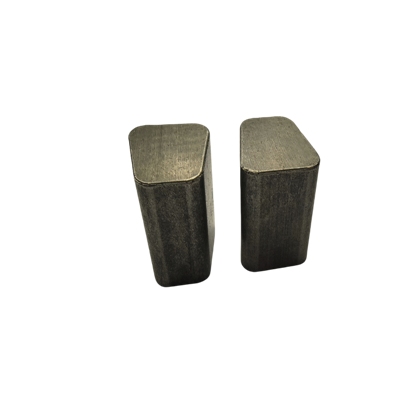
What Is Compression Moulded Magnets
Compression molded magnets are generally used in applications that do not require as much mechanical strength. Made of NdFeB powder and thermosetting epoxy resin binder. Higher magnetic strength that injection molded magnets. Suitable for applications requiring lower mechanical strength.
Why Choose Us
Efficient and convenient
The company has established marketing networks around the world to provide high-quality services to customers in an efficient and convenient manner.
Quality assurance
In terms of quality assurance, the company strictly follows the standards and norms of the industry quality system. Adopt industry-leading testing equipment to ensure product quality and good reputation.
Professional team
We have a team of skilled and experienced professionals who are well-versed in the latest technology and industry standards. Our team is dedicated to ensuring that our customers get the best service and support possible.
Competitive prices
We offer our products at competitive prices, making them affordable for our customers. We believe that high-quality products should not come at a premium, and we strive to make our products accessible to all.
Rich experience
Has a long-standing reputation in the industry, which makes it stand out from its competitors. With over many years of experience, they have developed the skills necessary to meet their clients' needs.
High quality products
We always put customer needs and expectations in the first place, refine on, continuous improvement, to seek every opportunity to do better, to provide customers with their expectations of quality products, to provide customers with the most satisfactory service at anytime.
-
![NdFeB Magnetic Assembly]() NdFeB Magnetic AssemblyWith the advancement of multidisciplinary cross-technology, composite devices of bonded NdFeB and metal parts will further develop in the direction of intelligence and modularization. Stainless steel
NdFeB Magnetic AssemblyWith the advancement of multidisciplinary cross-technology, composite devices of bonded NdFeB and metal parts will further develop in the direction of intelligence and modularization. Stainless steel -
![Axially Multipole Magnetized Magnet]() Axially Multipole Magnetized MagnetAxially multipole magnetized magnet is a special axial magnetization method.Axially multipole magnetized magnet is divided into single-sided multipole and double-sided multipole. Axially multipole
Axially Multipole Magnetized MagnetAxially multipole magnetized magnet is a special axial magnetization method.Axially multipole magnetized magnet is divided into single-sided multipole and double-sided multipole. Axially multipole -
![Magnetic Gears]() Magnetic GearsMagnetic Gears, also called magnetic transmission Gears, Magnetic Gear is a device that uses the interaction force between magnetic poles, attraction and repulsion as driving force to achieve
Magnetic GearsMagnetic Gears, also called magnetic transmission Gears, Magnetic Gear is a device that uses the interaction force between magnetic poles, attraction and repulsion as driving force to achieve -
![Super Bonded Neodymium Magnet]() Super Bonded Neodymium MagnetProduct name: super bonded neodymium magnet Specifications: Φ220xΦ216x30mm Material: NdFeB Residual magnetism: 0.75mT (7500Gauss) Processing method: Compression bonded magnet Surface
Super Bonded Neodymium MagnetProduct name: super bonded neodymium magnet Specifications: Φ220xΦ216x30mm Material: NdFeB Residual magnetism: 0.75mT (7500Gauss) Processing method: Compression bonded magnet Surface -
![Sensor Magnetic Ring]() Sensor Magnetic RingSensor Magnetic Ring
Sensor Magnetic RingSensor Magnetic Ring -
![Toy Magnets/Rare Earth Magnets]() Toy Magnets/Rare Earth MagnetsToy Magnets/Rare Earth Magnets
Toy Magnets/Rare Earth MagnetsToy Magnets/Rare Earth Magnets -
![Magnet With Anti-rotation Groove]() Magnet With Anti-rotation GrooveMagnet with anti-rotation groove
Magnet With Anti-rotation GrooveMagnet with anti-rotation groove -
![Internal Hole Flat Magnet]() Internal Hole Flat MagnetProduct name: Internal hole flat magnet Material: NdFeB 72/70pw permanent magnet Manufacturing process: Molded magnet Orientation: Isotropic magnet Ingredients: praseodymium5%, neodymium15%, iron69%,
Internal Hole Flat MagnetProduct name: Internal hole flat magnet Material: NdFeB 72/70pw permanent magnet Manufacturing process: Molded magnet Orientation: Isotropic magnet Ingredients: praseodymium5%, neodymium15%, iron69%, -
![NdFeB Plastic Compression Bonded, Isotopic Ring Magnet]() NdFeB Plastic Compression Bonded, Isotopic Ring MagnetProduct name:NdFeB plastic compression bonded, isotopic ring magnetMagnetisation type: multipolAmount of poles: 10 polMagnetizing: 50%N/S, 50%S/NMagnetizing side: inner peripheryMagnetizing
NdFeB Plastic Compression Bonded, Isotopic Ring MagnetProduct name:NdFeB plastic compression bonded, isotopic ring magnetMagnetisation type: multipolAmount of poles: 10 polMagnetizing: 50%N/S, 50%S/NMagnetizing side: inner peripheryMagnetizing -
![Industrial And Commercial Refrigeration/condensation/ice Making Motor Magnets/DC Motor Magnets]() Industrial And Commercial Refrigeration/condensation/ice Making Motor Magnets/DC Motor ...The magnet is used in industrial and commercial refrigeration/condensation/ice-making motor magnets/DC motors, and the motor power is 16W. For example, the refrigeration unit of cold drink equipment
Industrial And Commercial Refrigeration/condensation/ice Making Motor Magnets/DC Motor ...The magnet is used in industrial and commercial refrigeration/condensation/ice-making motor magnets/DC motors, and the motor power is 16W. For example, the refrigeration unit of cold drink equipment -
![Clean Robot Fan Rotor Magnet(Fan Rotor Assembly).]() Clean Robot Fan Rotor Magnet(Fan Rotor Assembly).Clean Robot fan rotor magnet(Fan rotor assembly)
Clean Robot Fan Rotor Magnet(Fan Rotor Assembly).Clean Robot fan rotor magnet(Fan rotor assembly) -
![Permanent Magnet For Clean-free Sweeping Robot BLDC Motor]() Permanent Magnet For Clean-free Sweeping Robot BLDC MotorBLDC Motor magnet rotor/DC motor magnet stator
Permanent Magnet For Clean-free Sweeping Robot BLDC MotorBLDC Motor magnet rotor/DC motor magnet stator


Magnetic Gears
What Is Magnetic Gears
Magnetic gears are non-contact gear systems that utilize magnetic force to transmit torque and motion between rotating shafts. Unlike traditional miter gears, which rely on tooth meshing to transfer power, Magnetic gears feature magnetic poles instead of tooth profiles. These poles generate repulsive or attractive forces, depending on their orientation, and drive gear rotation.
What Are the Applications for Magnetic Gears
Magnetic gears are an innovative technology that have several applications across various industries due to their unique advantages over traditional mechanical gears. Some of the common applications for magnetic gears include.
Wind turbines
Magnetic gears are often used in wind turbines to increase efficiency and reliability. They can help in reducing maintenance costs and improving the overall performance of the wind turbine system.
Marine propulsion systems
Magnetic gears can be used in marine propulsion systems to provide a more efficient and reliable alternative to traditional mechanical gears. They can help in reducing noise and vibration, as well as improving the overall efficiency of the propulsion system.
Electric vehicles
Magnetic gears can also be used in electric vehicles to improve the efficiency of the drivetrain. By using magnetic gears, electric vehicles can achieve higher efficiency and better performance compared to traditional mechanical gears.
Robotics
Magnetic gears are increasingly being used in robotics applications due to their compact size, high efficiency, and low maintenance requirements. They can be used in robotic joints, manipulators, and other motion control systems to improve performance and reliability.
Industrial machinery
Magnetic gears can be used in various industrial machinery applications to provide precise and reliable torque transmission. They can help in reducing maintenance costs and downtime, as well as improving the overall efficiency of the machinery.
Aerospace applications
Magnetic gears can also find applications in the aerospace industry, where lightweight and efficient systems are crucial. They can be used in aircraft systems, satellite mechanisms, and other aerospace applications to improve performance and reliability.
Magnetic gears can transmit torque without any mechanical contact. Hence, they have low vibration, no wear, and fatigue, which ensure maintenance-free operation. There are various types of magnetic gears. Among them, a planetary type magnetic gear, which consists of coaxial inner and outer rotors with surface-mounted permanent magnet and ferromagnetic stationary parts called pole-pieces, has recently attracted interest since it offers higher torque than other type magnetic gears. This paper presents a comprehensive investigation of the influence of geometry and position of the pole-pieces on torque characteristic based on finite element analysis and experiment. Surveyed parameters of the pole-pieces include lengths in the radial and axial directions and position in the radial direction. Finally, it is demonstrated that the maximum torque of the improved prototype magnetic gear is increased by 45% and the maximum efficiency achieves up to about 99%, which is equal to or more than a conventional planetary type mechanical gear.

Types of Magnetic Gears

Parallel Axis Magnetic Gears
These gears feature two parallel axes where the input and output rotors are situated. The intermediary rotor, located between the input and output, contains alternating pole magnetic pieces which facilitate the transfer of torque.
Coaxial Magnetic Gears
In these gears, the input and output shafts are aligned along the same axis. This design, coupled with the non-contact nature of the gears, allows for excellent torque density and high efficiency.
Planetary Magnetic Gears
Planetary magnetic gears are designed with one or more rotating gear components (planet gears) that revolve around the central, or sun gear. This results in a compact design with high torque output and efficiency.
Cylindrical Magnets
What Is Cylindrical Magnets
Cylinder magnets are commonly used in sensors, reed switches, holding, and medical applications. Cylinder magnets can be magnetised either through the length or across the diameter. Due to their shape cylinder magnets produce a magnetic field with a longer reach.
What Are Some Properties Of A Cylindrical Magnet
A cylindrical magnet, like any magnet, possesses certain properties that are characteristic of magnetic materials. Here are some properties of a cylindrical magnet
Magnetic Field
A cylindrical magnet produces a magnetic field around it. The magnetic field lines generated by the magnet run from the north pole to the south pole outside the magnet and from the south pole to the north pole inside the magnet.
Poles
A cylindrical magnet has two poles - a north pole and a south pole. The magnetic field lines emerge from the north pole and enter the south pole.
Magnetic Strength
The strength of a cylindrical magnet is typically measured in terms of its magnetic moment or magnetic flux density. This strength is dependent on the material the magnet is made of and its size.
Magnetization
A cylindrical magnet can be magnetized in different ways to enhance its magnetic properties. This process aligns the magnetic domains within the material to strengthen the overall magnetic field.
Retentivity
Retentivity, also known as remanence, is the ability of a magnet to retain its magnetization once it has been magnetized. Cylindrical magnets can have different levels of retentivity depending on the material they are made of.
Coercivity
Coercivity is the measure of a material's resistance to becoming demagnetized. A cylindrical magnet with high coercivity will require a stronger external magnetic field to demagnetize it.
Shape
The cylindrical shape of the magnet affects the distribution and strength of the magnetic field it produces. The field is strongest at the poles and gradually diminishes as you move away from the magnet.
Applications
Cylindrical magnets are commonly used in various applications such as electric motors, generators, sensors, speakers, magnetic bearings, magnetic separators, and more due to their unique shape and magnetic properties.
Cylinder magnets have a wide range of applications in various industries. Some common applications include:
Motors
Cylinder magnets are often used in motors to produce rotational force. The magnets are typically arranged in a specific pattern to create a magnetic field that drives the motor's rotation.
Generators
Cylinder magnets can also be used in generators to convert mechanical energy into electrical energy. In this application, the magnets are used to generate a magnetic field that is used to produce an electric current.
Sensors
Cylinder magnets are often used in sensors to detect the presence or absence of a magnetic field. For example, they can be used in proximity sensors to detect the presence of metal objects or in hall effect sensors to measure the speed or position of a moving object.
Holding and fastening
Cylinder magnets can be used to hold or fasten objects in place. For example, they can be used to hold tools or other metal objects to a metal surface or to fasten two metal parts together.
Separation
Cylinder magnets can be used to separate ferromagnetic materials from non-ferromagnetic materials. For example, they can be used to separate iron ore from sand or to remove metal contaminants from other materials.

How to Produce Cylinder Magnet

Raw material preparation
The first step in the production process is to prepare the raw materials, which typically include powders of magnetic materials such as neodymium, iron, and boron. These powders are mixed together to create a homogenous mixture.
Compaction
The mixture is then compacted using a hydraulic press or other compaction method to form a dense, uniform mass.
Sintering
The compacted mixture is then heated to a high temperature in a furnace, a process called sintering. This helps to bond the particles together and create a solid, cohesive magnet.
Shaping
The sintered magnet is then shaped into the desired cylinder shape using a lathe or other machining process.
Coating
The surface of the cylinder magnet may be coated with a protective layer to improve its durability and performance. This is typically done using a process called electroplating, in which a thin layer of metal is deposited onto the surface of the magnet.
Testing
The finished cylinder magnet is then tested to ensure that it meets the required specifications for size, strength, and performance.
Neodymium Arc Magnets
What Is Neodymium Arc Magnets
Strong Neodymium arc magnets are a type of permanent magnet made from an alloy of neodymium, iron, and boron (NdFeB). They curved magnets are shaped in segments of a circle, resembling arcs, and are specifically designed to fit into circular or cylindrical assemblies and provide an excellent power to weight ratio.
Neodymium Arc Magnets Key Characteristics
Strong Magnetic Field
Neodymium arc magnets have one of the strongest magnetic fields among permanent magnets, making them highly efficient in applications requiring a compact and powerful magnet.
Custom Shapes
The arc shape is tailored to fit into motors or generators, allowing for a more efficient magnetic field distribution around the rotation axis.
High Coercivity
They have a high resistance to demagnetization, maintaining their magnetic properties under various conditions.
Temperature Sensitivity
While neodymium magnets are known for their strength, their magnetic properties can decrease at high temperatures. Various grades are available to withstand different temperature ranges.
Corrosion Resistance
Arc magnets are often coated to prevent corrosion. Common coatings include nickel, zinc, and epoxy.
Neodymium arc magnets Applications
Electric Motors and Generators
The arc shape is ideal for the circular configurations of electric motors and generators, contributing to efficient energy conversion.
Wind Turbines
Used in the generators of wind turbines to help convert wind energy into electrical energy.
Magnetic Bearings
Employed in high-precision magnetic bearings for reduced friction and wear in various machinery.
Audio Equipment
High-quality speakers and headphones sometimes use neodymium arc magnets for their powerful and precise magnetic fields.
Certifications

Our Factory
Highmag Technology (ShenZhen) Ltd is the subsidiaries of AT&M (Stock Code:000969), which is powerful in new material area and completed IPO in Shenzhen Stock Exchange. We are a professional manufacturer of NdFeB magnet, MIM (metal injection moulding) and SMC (Soft Magnetic Composite). We started magnet manufacturing in Taiwan from 1989 and founded ShenZhen factory in 2001. In 2003, the asset restructuring has become a holding subsidiary. During these years, Highmag has performed excellently and received praise from customers for the technology, manufacturing, service, quality, lead time and cost control. Highmag keeps developing new products and new methods and making full use of geographic advantages--Shenzhen, in order to satisfy the wide requirements of customers in various fields.


FAQ
Q: What is the main advantage of magnetic gears?
Q: What are the applications of magnetic gears?
Q: Do magnetic gears have backlash?
Q: What are cylindrical magnets?
Q: What is the shape of a cylindrical magnet?
Q: What is the difference between bar magnet and cylindrical magnet?
Q: What are the properties of cylindrical magnet?
Q: How many poles has a cylindrical magnet?
Q: What is the name of cylindrical magnet?
Q: What is the magnetic dipole moment of a cylindrical magnet?
Q: What is the property of cylindrical magnet?
Q: What are neodymium arc magnets?
Q: How do neodymium arc magnets differ from other neodymium magnets?
Q: What are the common uses for neodymium arc magnets?
Q: Can neodymium arc magnets be customized?
Q: How strong are neodymium arc magnets?
Q: Are neodymium arc magnets coated?
Q: Do neodymium arc magnets have a specific magnetic orientation?
Q: Can neodymium arc magnets lose their magnetism?
Q: How are neodymium arc magnets manufactured?
We're well-known as one of the leading compression moulded magnets manufacturers and suppliers in China. Please feel free to buy customized compression moulded magnets made in China here from our factory. Good service and quality products are available.
stator magnets, magnets in electric vehicles, rare earth magnets roundPopular Products