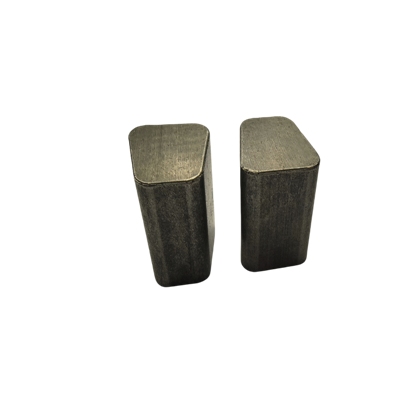
What Is Metal Injection Molding(mim)
Metal injection molding, also known as powder injection molding, is a process whereby a powdered metal feedstock is used in an injection molding process to create intricate metal parts. The powder metal feedstock is bound using an organic binder which creates powdered-metal pellets. The metal pellets are then injection molded into the part shape before debinding and sintering.
Benefits of Metal Injection Molding(MIM)
Complicated shapes of parts
MIM allows us to produce parts with complicated shapes and fine details that would be difficult, if not impossible, to achieve with traditional metal working methods such as machining or casting. This capability opens new design possibilities for engineers and designers.
High Volume Production
Once the tooling is created, MIM can produce large quantities of parts relatively quickly and consistently, making it ideal for mass production. The economies of scale can significantly reduce the cost per part, especially for complex shapes.
Material Variety
A wide range of metals can be used in MIM, including stainless steel, titanium, tungsten, and various alloys. This versatility allows manufacturers to select the optimal material for each specific application based on properties like strength, durability, and corrosion resistance.
Accuracy and Consistency
MIM parts have high dimensional accuracy and consistency from part to part, which reduces the need for secondary operations. This precision is crucial for components in industries where tight tolerances are a must, such as in medical devices or aerospace components.
Efficient Material Usage
MIM minimizes waste compared to subtractive manufacturing processes since the metal powder can be fully utilized within the mold. This efficiency can lead to cost savings, especially with expensive materials.
-
![Camera Three-way Rotating Rod Mim]() Camera Three-way Rotating Rod MimMetal Injection Molding (MIM) is a Molding process in which a plasticized mixture of Metal powder and binder is injected into a model.
Camera Three-way Rotating Rod MimMetal Injection Molding (MIM) is a Molding process in which a plasticized mixture of Metal powder and binder is injected into a model. -
![Mobile Phone Sim Card Mim]() Mobile Phone Sim Card MimMobile phone Cato is a very common and simple parts of the mobile phone, which is used to fix the role of mobile phone card and memory card, if it is not the friend's experience
Mobile Phone Sim Card MimMobile phone Cato is a very common and simple parts of the mobile phone, which is used to fix the role of mobile phone card and memory card, if it is not the friend's experience -
![Headphone Speaker Conduit Mim]() Headphone Speaker Conduit MimThe earphone tube is designed to be rotated and detachable. It is made of standard stainless steel. Every time you screw on the tube, it is full of ceremony!
Headphone Speaker Conduit MimThe earphone tube is designed to be rotated and detachable. It is made of standard stainless steel. Every time you screw on the tube, it is full of ceremony! -
![Mobile Phone Camera Holder Mim]() Mobile Phone Camera Holder MimIn recent years, MIM injection molding provides technical support for the development of digital electronics industry.
Mobile Phone Camera Holder MimIn recent years, MIM injection molding provides technical support for the development of digital electronics industry. -
![Smart Bracelet Wear Mim]() Smart Bracelet Wear MimSmart wearable devices are not very strange to us, such as sports bands, smart watches, smart clothes, virtual head-worn displays and so on, which provide people with a variety of experiences.
Smart Bracelet Wear MimSmart wearable devices are not very strange to us, such as sports bands, smart watches, smart clothes, virtual head-worn displays and so on, which provide people with a variety of experiences. -
![Stainless Steel Headphones Mim]() Stainless Steel Headphones MimAs a product of the high-tech era, Bluetooth headset is applied to the hands-free headset device. In this way, the problem of wire entanglements can be solved, and consumers and ordinary people can
Stainless Steel Headphones MimAs a product of the high-tech era, Bluetooth headset is applied to the hands-free headset device. In this way, the problem of wire entanglements can be solved, and consumers and ordinary people can -
![Communication Equipment Structure Mim]() Communication Equipment Structure MimWireless frequency: 5.8g /2.4G. Quantity of machine: within 50 sets. Weight: 0.3 kg
Communication Equipment Structure MimWireless frequency: 5.8g /2.4G. Quantity of machine: within 50 sets. Weight: 0.3 kg -
![Mobile Phone Charging Port Mim]() Mobile Phone Charging Port MimMobile phone charger is one of the most commonly used devices in our life. It works by converting AC voltage into DC voltage output. A mobile phone charger usually consists of A plastic shell, an
Mobile Phone Charging Port MimMobile phone charger is one of the most commonly used devices in our life. It works by converting AC voltage into DC voltage output. A mobile phone charger usually consists of A plastic shell, an -
![Electronic Connector Mim]() Electronic Connector MimThe CONNECTOR is the CONNECTOR. Also known as connectors, plugs and sockets. It generally refers to electrical connectors. A device that connects two active devices to transmit currents or signals.
Electronic Connector MimThe CONNECTOR is the CONNECTOR. Also known as connectors, plugs and sockets. It generally refers to electrical connectors. A device that connects two active devices to transmit currents or signals. -
![Fiber Base Mim]() Fiber Base MimOutdoor dual-frequency gigabit base station AP (omnidirectional) HW-AP880. Model: HW - AP880. Coverage distance: radius 300-500 meters
Fiber Base MimOutdoor dual-frequency gigabit base station AP (omnidirectional) HW-AP880. Model: HW - AP880. Coverage distance: radius 300-500 meters -
![Communication Base Mim]() Communication Base MimGigabit external bridge HW-AC5500-W. Model: HW - AC5500 - W. Transmission range: depends on the antenna
Communication Base MimGigabit external bridge HW-AC5500-W. Model: HW - AC5500 - W. Transmission range: depends on the antenna -
![Electronic Product Structure Mim]() Electronic Product Structure MimIn recent years, technology has penetrated into every aspect of personal life, whether it is smart home, smart bracelet or smart watch, has become a popular object of consumers. So what smart gadgets
Electronic Product Structure MimIn recent years, technology has penetrated into every aspect of personal life, whether it is smart home, smart bracelet or smart watch, has become a popular object of consumers. So what smart gadgets


Efficient and convenient
The company has established marketing networks around the world to provide high-quality services to customers in an efficient and convenient manner.
Quality assurance
In terms of quality assurance, the company strictly follows the standards and norms of the industry quality system. Adopt industry-leading testing equipment to ensure product quality and good reputation.
Professional team
We have a team of skilled and experienced professionals who are well-versed in the latest technology and industry standards. Our team is dedicated to ensuring that our customers get the best service and support possible.
Competitive prices
We offer our products at competitive prices, making them affordable for our customers. We believe that high-quality products should not come at a premium, and we strive to make our products accessible to all.
Rich experience
Has a long-standing reputation in the industry, which makes it stand out from its competitors. With over many years of experience, they have developed the skills necessary to meet their clients' needs.
High quality products
We always put customer needs and expectations in the first place, refine on, continuous improvement, to seek every opportunity to do better, to provide customers with their expectations of quality products, to provide customers with the most satisfactory service at anytime.
Metal Injection Molding in Action
Medical
Metal injection molding is commonly used in the production of medical devices such as orthopedic implants (hip replacements, knee replacements, and spinal implants), surgical instruments (scissors, forceps, and retractors), diagnostic equipment (blood glucose meters, breath analyzers, and pulse oximeters), and dental devices (implants, bridges, and crowns), where precision, reliability, and biocompatibility are critical factors.
Consumer
MIM is also a great option for the production of consumer electronics, such as cell phones, wearable devices, and other electronic components. It' s also commonly used in the manufacture of sporting goods (golf club heads, fishing reels, and ski bindings) and jewelry (pendants, earrings, and bracelets).
Automotive
Metal injection molding is widely used in the production of automotive components such as rocker arms, turbocharger vanes, shift levers, seat components, brake components, injector nozzles, light housings, and numerous fittings and connectors.
Aerospace
MIM is excellent for the production of engine components (turbine blades, nozzles, and combustion chambers), airframe components (hinges, latches, and actuators), avionics components (connectors, switches, and sensors), and spacecraft components (solar panels, antennas, and structural components).
Agricultural
The strength and durability MIM provides make it a popular production choice for agricultural components, such as tractor parts (gears, bearings, and bushings), implement parts (plow shares, cultivator points, and harrow teeth), irrigation components (nozzles, valves, and couplings), and tools (pruning shears, hoes, and cultivators).
An Overview of the Metal Injection Moulding Process
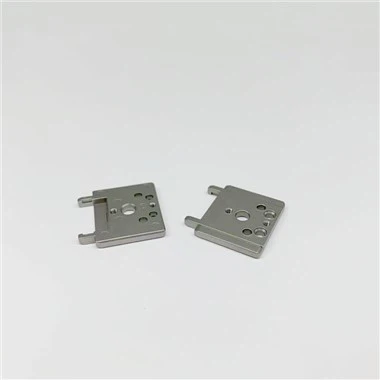


Preparing the feedstock
The primary raw materials Metal Injection Molding are metal powders and a thermoplastic binder. The binder is only an intermediate processing aid and must be removed from the products after injection moulding. The properties of the powder determine the final properties of the Metal Injection Molded product.
The blended powder mix is worked into the plastified binder at an elevated temperature using a kneader or shear roll extruder. The intermediate product is the so-called feedstock. It is usually granulated with granule sizes of several millimetres, as is common in the plastic injection moulding industry.
Feedstock can either be purchased ‘‘ready to mould’’ from a number of international suppliers, or it can be manufactured in-house by a MIM producer if the necessary skills and knowledge are available.
Injection moulding
The ‘green’ MIM parts are formed in an injection moulding process equivalent to the forming of plastic parts. The variety of part geometries that can be produced by this process is similar to the great variety of plastic components.
Binder removal
The subsequent binder removal process serves to obtain parts with an interconnected pore network without destroying the shape of the components. The types of binder removal processes applied are further explained later in this introduction.
At the end of the binder removal process there is often still some binder present in the parts holding the metal powder particles together, but the pore network allows the evaporation of the residual binder quickly in the initial phase of sintering, at the same time as sintering necks start to grow between the metallic particles.
Sintering
The sintering process leads to the elimination of most of the pore volume formerly occupied by the binder. As a consequence, MIM parts exhibit a substantial shrinkage during sintering. The linear shrinkage is usually as high as 15 to 20%.
If required, sintered MIM parts may be further processed by conventional metalworking processes such as heat treatments or surface treatments in the same way as cast or wrought parts.
For certain applications, such as the automotive, medical and aerospace sectors, Hot Isostatic Pressing (HIP) can be used to completely remove any residual porosity. As MIM parts are typically small, this can be relatively cost effective for critical components.
Metal Injection Molding Vs. Die Casting
Precision & Tolerances
Metal injection molding creates very precise parts with relatively tight tolerances. On the other hand, die casting can have varying dimensions which usually require the part to be trimmed to meet specifications. Also, die casting does not allow much control over wall thickness.
Materials Used
MIM allows for both non-ferrous and ferrous materials. Die casting typically uses non-ferrous metals. The difference is ferrous metals contain iron while non-ferrous metals don' t.
Surface Finish
Die casting may require excess metal to be trimmed off and offers a medium surface finish. MIM allows for a high surface finish that typically doesn't require additional finishing.
Tooling/Manufacturing Costs
Costs are dependent on the complexity of the part. While metal injection molding offers low costs, it does have higher process costs than die casting. Die casting may be cheaper than MIM, depending on the specific application.
Mold Differences
MIM allows for greater flexibility when it comes to the mold, yet the mold might have a reduced lifespan. Die casting has good flexibility, yet not as much as MIM methods. Dies used in die casting, however, typically last longer.
The Through Metal Injection Molding Technology Market size is expected to develop revenue and exponential market growth at a remarkable CAGR during the forecast period from 2023–2030. The growth of the market can be attributed to the increasing demand for Through Metal Injection Molding Technology owning to the Medical, Military, Electronic, Aerospace, Others Applications across the global level. The report provides insights regarding the lucrative opportunities in the Through Metal Injection Molding Technology Market at the country level. The report also includes a precise cost, segments, trends, region, and commercial development of the major key players globally for the projected period.
The Through Metal Injection Molding Technology Market report represents gathered information about a market within an industry or various industries. The Through Metal Injection Molding Technology Market report includes analysis in terms of both quantitative and qualitative data with a forecast period of the report extending from 2023 to 2030. The report is prepared to take into consideration various factors such as Product pricing, Product or services penetration at both country and regional levels, Country GDP, market dynamics of parent market & child markets, End application industries, major players, consumer buying behavior, economic, political, social scenarios of countries, many others. The report is divided into various segments to offer a detailed analysis of the market from every possible aspect of the market.
The overall report focuses on primary sections such as – market segments, market outlook, competitive landscape, and company profiles. The segments provide details in terms of various perspectives such as end-use industry, product or service type, and any other relevant segmentation as per the market’s current scenario which includes various aspects to perform further marketing activity. The market outlook section gives a detailed analysis of market evolution, growth drivers, restraints, opportunities, and challenges, Porter’s 5 Force’s Framework, macroeconomic analysis, value chain analysis and pricing analysis that directly shape the market at present and over the forecasted period. The drivers and restraints cover the internal factors of the market whereas opportunities and challenges are the external factors that are affecting the market. The market outlook section also gives an indication of the trends influencing new business development and investment opportunities.
Considerations in Metal Injection Molding
Ejector Marks
After the part has solidified and dwelled, it is removed from the mold by ejector pins. These pins leave marks on the surface of the part. Hence, the location of critical features in the part must be considered during the design phase. The critical features must be away from the ejector marks. Ejector pin sleeves may be used to minimize the depth and appearance of the mark.
Parting Line
The parting line is a separation line that indicates the plane where the mold halves meet. A visible line is imprinted on the part's surface, which coincides with the parting line. Depending on the mold tooling design, it may be a straight line or a curve. The molten feedstock tends to move out of the parting line because air is easiest to vent on that location. All molded parts have a parting line, and having one is inevitable. Having a parting line may be harmless, but its impact must be assessed if it affects the part's functionality, form, and geometric tolerance. A parting line may be concealed by placing it on the edges of the part. Locating critical features on the parting line must be avoided as much as possible.
Mold Gating
A mold gate is an opening wherein the molten feedstock is introduced to a mold cavity. The gate must be placed on the portion of the metal part with the largest cross-sectional area so that the thicker sections will be filled with the molten feedstock first. The gate also leaves an imprint on the metal part; hence, the impact of this imprint on the functionality of the part must be assessed.
Part Thickness
As much as possible, uniform part and wall thickness should be maintained to avoid sink formation, warpage, and shrinkage during sintering. Thinner sections are sintered first before the thicker ones, resulting in distortion of the part. The change in part thickness must be gradual.
MIM is suitable for parts with wall thickness ranging from 0.1 mm to 10 mm. Molding of thinner parts can reduce the sintering and molding cycle times.
Corners and Holes
Small holes and holes located near the corners and edges of the part must be avoided. Sharp corners can favor the formation of voids as the molten feedstock may not reach these portions; hence, this feature must be avoided. Rounded corners in the part design are preferred.
Producing Undercuts
Undercuts can be readily made through MIM without the need for machining. A cam action is required to produce undercuts. It is placed in the mold before it closes and slides away from the green part before it is ejected from the mold. Putting an undercut on internal bores must be prevented.
Sintering Process
Flat parts may be readily placed in standard flat support trays during sintering. Hanging sections included in the part can sag or collapse due to gravity. Hence, a custom fixture to support these sections is necessary.
Reasons to choose Metal Injection Molding (MIM) Technology


More similarities to the final product without any secondary processing
Complex features/minute details often need secondary machining, but these can be usually obtained directly from the Metal injection molding process, without additional operations. Features like Undercut, Knurling, Threads, Angular Holes, Calligraphy, and complex profiles are easily achieved in MIM from the mold itself.
The Superpower to design and manufacture small and complex parts quickly
Since the MIM process allows us to mold the near-net-shape in which most cases do not require any secondary operations , it is fairly a quick way to manufacture complex components since the basic shape with features can be molded with lower cycle time. MIM utilizes multi-cavity . We can achieve Tight tolerances in metal injection molding process.
Integration using MIM
Usually, metal processing requires manufacturing of parts separately and then combining through welding, brazing, or press-fitting operations because of the design constraints, also the conventional method involves lots of material and energy wastage, but the MIM process allows to mold the near-net-shape of the part with all the desired intricate features like angular holes, slots, 3D profile.
Cost-effective
MIM process has no parallels when it comes to manufacturing small, highly complex, and intricate parts with profiles that are either impossible or cost-prohibitive with conventional techniques. To understand more effectively how the MIM is Cost-effective metal manufacturing.
Precision manufacturing even for higher annual requirements
MIM can result in eliminating process steps, thereby reducing product cost, making it feasible to manufacture complex parts in high volumes without the need for additional machinery and investment in infrastructure. Easily we achieve Consistent size and shape in MIM technology.
Very wide and efficient range of materials
The range of materials that can be processed in MIM is really wide and effective. It could be anything from stainless steel to high-speed steel, magnetic alloys to copper alloys, and surprisingly Tungsten. Special Rare metals, precious metals, and other types of high temperature melting alloys can also be used. MIM has limitations when it comes to low melting alloys like Aluminium, Zinc as it is difficult to remove binders in the sintering process.
INDO-MIM offers a wide range of 85+ material options, ranging from Tool Steel, Carbon Steel, Stainless Steel, Soft magnetic Steel, Superalloys, Titanium, and Cobalt chrome. We also have the capability of customizing the feedstock as per our customer/application requirements to achieve specific mechanical properties.
Higher Strength and Density
During the process of sintering, the part is heated to its recrystallization temperature, resulting in intermolecular fusion. The sintered part is denser and stronger than the raw form. After heat treatment, the finished product can achieve up to 98% theoretical density and mechanical properties comparable to a wrought form of the same base material.
Certifications

Our Factory
Highmag Technology (ShenZhen) Ltd is the subsidiaries of AT&M (Stock Code:000969), which is powerful in new material area and completed IPO in Shenzhen Stock Exchange. We are a professional manufacturer of NdFeB magnet, MIM (metal injection moulding) and SMC (Soft Magnetic Composite). We started magnet manufacturing in Taiwan from 1989 and founded ShenZhen factory in 2001. In 2003, the asset restructuring has become a holding subsidiary. During these years, Highmag has performed excellently and received praise from customers for the technology, manufacturing, service, quality, lead time and cost control. Highmag keeps developing new products and new methods and making full use of geographic advantages--Shenzhen, in order to satisfy the wide requirements of customers in various fields.


FAQ
Q: What is the metal injection molding process?
Q: Why use metal injection molding?
Q: What kind of tooling is used in metal injection molding?
Q: What is the process of metal injection molding?
Q: What is the market trend in metal injection molding?
Q: How long does metal injection molding take?
Q: What is the shrinkage of metal injection molding?
Q: Why metal injection molding?
Q: What are the steps in metal injection molding?
Q: What are the limitations of metal injection molding?
Q: What is the future of metal injection molding?
Q: What materials are used in metal injection molding?
Q: What is the principle of metal injection molding?
Q: What is the temperature of metal injection molding?
Q: What is the shrinkage of metal injection molding?
Q: What is the strength of metal injection molding?
Q: What is the minimum thickness for metal injection molding?
Q: What are the advantages of metal injection molding?
Q: What size particle is metal injection molding?
Q: What is the draft angle for metal injection molding?
We're well-known as one of the leading metal injection molding manufacturers and suppliers in China. Please feel free to buy customized metal injection molding made in China here from our factory. Good service and quality products are available.
Popular Products