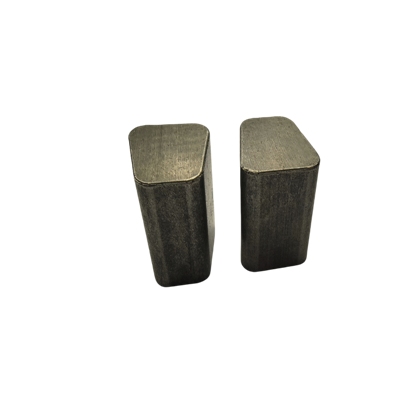
What Is Permanent Magnet
A permanent magnet is a type of magnet that retains its magnetic properties indefinitely, even after removing the external magnetic field. Neodymium magnets or NIB (neodymium-iron-boron magnets) are some of the strongest permanent magnets, even stronger than iron ones. Magnetic poles of magnets cannot be isolated.
Benefits of Permanent Magnet
Permanency
Just like their name suggests, permanent magnets are capable of continually serving you diligently. This is because they do not necessitate electrical energy to preserve their magnetic properties. For instance, if your refrigerator is equipped with a permanent magnet, you can rest assured that all your essentials will be preserved properly and efficiently.
Energy Efficient
One key feature of permanent magnets is their independence or lack of reliance on external electrical supply. They hardly demand electricity to exhibit or retain their magnetization mojo. This translates into lower power bills as well as numerous rewards to the ecosystem.
Compact
To operate in applications that necessitate stronger magnetic properties, one does not necessarily need a relatively large permanent magnet. This is because permanent magnets are capable of generating robust magnetic fields irrespective of size. This property makes them pivotal for applications with limited spaces. For instance, they are broadly employed in medical apparatuses and electronic equipment due to their compactness.
Cost-Effectiveness
Irrespective of the operation, cost is often a major concern for many. However, with a permanent magnet, you do not have to be overly concerned about the overall cost implications. This is because these magnets are specially designed to guarantee operational efficiency, which often translates into overall cost-efficiency in the long run.
High Magnetic Power
Permanent magnets are predominantly engineered to demonstrate robust magnetic capacities. Whether it is attraction or repulsion, you can trust a permanent magnet to do the work competently. This is particularly important for applications that deem strong magnetic properties as an absolute component. For example, generators and motors.
Sustainability
In a bid to fend off the adverse effects of climate change, the world is continually embracing sustainable technologies. Permanent magnets are considerable contributors to sustainability and their application to facilitate sustainability ranges from electric vehicles to electric motors. They help minimize carbon emissions by shrinking fossil fuel dependence.
Zero Electromagnetic Interference
Electromagnets are often susceptible to electromagnetic interference (EMI) unlike permanent magnets. This makes permanent magnets ideal for use in sensitive equipment such as medical equipment.
Versatility
Owing to their zero electromagnetic interference, robust magnetic power, compactness, and sustainability among other benefits, permanent magnets come in handy in multiple areas. Their application range spans from wind turbines to medical devices. Additionally, they are receptive to customization, which makes their application range virtually limitless.
-
![Bonded Magnet]() Bonded MagnetHair Dryer Nozzle Magnet Bonded magnet
Bonded MagnetHair Dryer Nozzle Magnet Bonded magnet -
![NdFeB Magnetic Assembly]() NdFeB Magnetic AssemblyWith the advancement of multidisciplinary cross-technology, composite devices of bonded NdFeB and metal parts will further develop in the direction of intelligence and modularization. Stainless steel
NdFeB Magnetic AssemblyWith the advancement of multidisciplinary cross-technology, composite devices of bonded NdFeB and metal parts will further develop in the direction of intelligence and modularization. Stainless steel -
![Segment Magnets]() Segment MagnetsSegment magnets some time can be called arc magnets.it is a type of permanent magnet made from an alloy of neodymium, iron, and boron (NdFeB).nomally the magnets are with Znic or
Segment MagnetsSegment magnets some time can be called arc magnets.it is a type of permanent magnet made from an alloy of neodymium, iron, and boron (NdFeB).nomally the magnets are with Znic or -
![NdFeB Bonded Magnet Rotors]() NdFeB Bonded Magnet RotorsNdFeB Bonded Magnet Rotors are magnetic device composed of bonded magnet and shaft. Bonded NdFeB magnet rotors are usually used as the inner rotor of brushless DC motor, they commonly used in power
NdFeB Bonded Magnet RotorsNdFeB Bonded Magnet Rotors are magnetic device composed of bonded magnet and shaft. Bonded NdFeB magnet rotors are usually used as the inner rotor of brushless DC motor, they commonly used in power -
![Water Pump Impeller]() Water Pump ImpellerAn impeller is a rotating iron or steel disc with vanes in a centrifugal pump. Impellers transfer energy from the motor that drives the pump to the fluid being pumped by accelerating the fluid
Water Pump ImpellerAn impeller is a rotating iron or steel disc with vanes in a centrifugal pump. Impellers transfer energy from the motor that drives the pump to the fluid being pumped by accelerating the fluid -
![Plastic Bonded Ferrite]() Plastic Bonded FerritePlastic bonded ferrite is also called injection molded ferrite. It is processed by injection molding from ferrite powder and thermoplastic resin (PA6/PA12/PA66/PPS). Injection molded ferrite is an
Plastic Bonded FerritePlastic bonded ferrite is also called injection molded ferrite. It is processed by injection molding from ferrite powder and thermoplastic resin (PA6/PA12/PA66/PPS). Injection molded ferrite is an -
![Magnet Rotors]() Magnet RotorsMagnet Rotors: the rotating part of the motor. In the motor, Magnet Rotors are mainly used to generate a magnetic field to transmit torque and motion to the outside, thereby realizing the conversion
Magnet RotorsMagnet Rotors: the rotating part of the motor. In the motor, Magnet Rotors are mainly used to generate a magnetic field to transmit torque and motion to the outside, thereby realizing the conversion -
![Water Pump Impeller]() Water Pump ImpellerA water pump impeller is the rotating part or steel disc with blades in a water pump. It transfers energy from the motor driving the pump to the pumped liquid by accelerating the fluid radially
Water Pump ImpellerA water pump impeller is the rotating part or steel disc with blades in a water pump. It transfers energy from the motor driving the pump to the pumped liquid by accelerating the fluid radially -
![Plastic Magnet Rotor]() Plastic Magnet RotorPlastic magnet rotor is a composite material made by hot-melt mixing of permanent magnetic powder and resin polymer (PA6, PA12, PPS) and other compounds. It is manufactured into a plastic magnetic
Plastic Magnet RotorPlastic magnet rotor is a composite material made by hot-melt mixing of permanent magnetic powder and resin polymer (PA6, PA12, PPS) and other compounds. It is manufactured into a plastic magnetic -
![Bonded Neodymium Magnets]() Bonded Neodymium MagnetsNeodymium magnet, also called NdFeB magnet, is a tetragonal crystal composed of neodymium, iron, boron (Nd2Fe14B) and other elements. Neodymium magnets were discovered in 1982 by Masato Sagawa of
Bonded Neodymium MagnetsNeodymium magnet, also called NdFeB magnet, is a tetragonal crystal composed of neodymium, iron, boron (Nd2Fe14B) and other elements. Neodymium magnets were discovered in 1982 by Masato Sagawa of -
![Magnet Holder]() Magnet HolderThe so-called magnet holder is to put the magnet into an iron or copper container (concave type, square type, ring type, column type or special shape, etc.) to multiply its adsorption force and apply
Magnet HolderThe so-called magnet holder is to put the magnet into an iron or copper container (concave type, square type, ring type, column type or special shape, etc.) to multiply its adsorption force and apply -
![Axially Multipole Magnetized Magnet]() Axially Multipole Magnetized MagnetAxially multipole magnetized magnet is a special axial magnetization method.Axially multipole magnetized magnet is divided into single-sided multipole and double-sided multipole. Axially multipole
Axially Multipole Magnetized MagnetAxially multipole magnetized magnet is a special axial magnetization method.Axially multipole magnetized magnet is divided into single-sided multipole and double-sided multipole. Axially multipole


Efficient and convenient
The company has established marketing networks around the world to provide high-quality services to customers in an efficient and convenient manner.
Quality assurance
In terms of quality assurance, the company strictly follows the standards and norms of the industry quality system. Adopt industry-leading testing equipment to ensure product quality and good reputation.
Professional team
We have a team of skilled and experienced professionals who are well-versed in the latest technology and industry standards. Our team is dedicated to ensuring that our customers get the best service and support possible.
Competitive prices
We offer our products at competitive prices, making them affordable for our customers. We believe that high-quality products should not come at a premium, and we strive to make our products accessible to all.
Rich experience
Has a long-standing reputation in the industry, which makes it stand out from its competitors. With over many years of experience, they have developed the skills necessary to meet their clients' needs.
High quality products
We always put customer needs and expectations in the first place, refine on, continuous improvement, to seek every opportunity to do better, to provide customers with their expectations of quality products, to provide customers with the most satisfactory service at anytime.
Types of Permanent Magnet
Ceramic magnets
Ceramic magnets or ferrite magnets are made from iron oxide and barium. They are manufactured by the process of pressing and sintering and are fragile. They are superior in terms of magnetic strength and resistance to demagnetising. Due to this, they are used widely in many instruments. Ceramic magnets have a high coercive force and are resistant to corrosion.
Alnico magnets
Alnico magnets are made of aluminium, nickel, cobalt and other materials that enhance magnetic abilities. They can remain stable at high temperatures and are resistant to corrosion. They are made from casting and sintering. They are stable at high temperatures and can withstand force.
Samarium-Cobalt (SmCo) magnets
These are made from rare earth metal with high oxidation state and magnetic strength. They are used in applications that are used at high temperatures. They have a high resistance to corrosion. SmCo magnets are costly and have low magnetic strength. They have high energy products.
Neodymium Iron Boron magnets
These permanent magnets are made from Neodymium, Iron and Boron. They get oxidised easily and are moderately resistant to temperature. They are costly and used only in selective applications. These magnets are highly coercive. They have high energy products.
Injection-molded magnets
These permanent magnets are used in molding different materials and are quite expensive. They have moderate energy products and coercive force. They can’t withstand high temperatures.
Flexible magnets
They are similar to injection-molded magnets but are produced in flat strips and sheets. They are cheap. They have a moderate coercive force and high corrosion resistance.
What is the Difference Between Permanent Magnets and Temporary Magnets
A permanent magnet is a type of magnet that does not require an external magnetic field to remain fully magnetized, while a temporary magnet is a type of magnet that requires an external magnetic field to remain fully magnetized.
The properties of a permanent magnet do not change, whereas a temporary magnet is a magnet whose magnetic properties are constantly changing. Permanent magnets are made of hard materials, while temporary magnets are made of soft materials.
The magnetic poles of permanent magnets can never be reversed, while the magnetic properties of temporary magnets can be reversed.
The magnetic field strength of a permanent magnet is constant, while the strength of a temporary magnet always changes with conditions.
Permanent magnets don't need electricity to work like magnets, while temporary magnets always need electricity to work like magnets.
Permanent magnets are called bar magnets, while temporary magnets are also called electromagnets.
The magnetic field in the permanent magnet does not disappear with the disappearance of the external magnetic field, while the magnetic field in the temporary magnet disappears when the external magnetic field disappears.
The magnetic domains of permanent magnets, once aligned, can never be easily reversed, while the magnetic domains of temporary magnets, once aligned, are easily reversed.
In physics, permanent magnets are the type of magnets that are made of a hard permanent ferromagnetic material, while temporary magnets are the type of magnets that are made of some ferromagnetic temporary material.
Common Uses of Permanent Magnets in Everyday Life
Permanent magnets have a wide range of applications. Here are 6 of the most common ones.


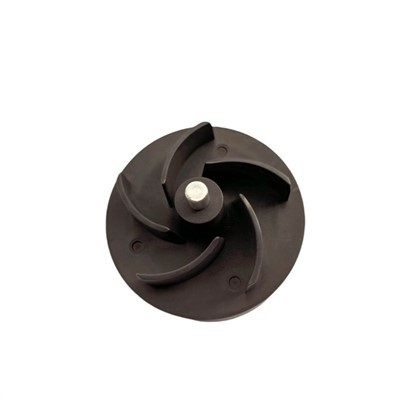
Automobile manufacturing
Both hybrid and electric vehicles are manufactured using very powerful permanent magnets. The main principle used here is the ability of the magnets to convert mechanical force into electrical force. These magnets are an essential component of the vehicles and are made of materials with a high composition of rare earth magnets. These kinds of magnetic materials are pricey and limited in supply.
Loudspeakers
Loudspeakers contain a mobile electromagnetic coil, around which the permanent magnet is fixed. This setup uses the same principle in electric cars, where electrical energy is converted into mechanical energy. The electromagnetic material is attached to a diaphragm or cone, amplifying vibrations to emit sound waves. The frequency of the vibration controls the pitch or intensity of the sound produced by the loudspeaker.
Hard disk drive
Another place where permanent magnets find practical application is in disk drives. They play a central role in helping to store information in the drives. Hard disk drives (HDD) usually are made up of 3 permanent magnets. The mechanism involved in reading and writing information on hard disks is quite interesting. A fixed magnet serves as the actuator, moving the read-write arm based on its interaction with an electromagnet. There’s another small permanent magnet at the end of the read-write arm, which is in charge of the reading-writing actions using a platter. The third magnet is a spindle motor, which facilitates the movement (rotation) of the platter at high speed. This way, the HDD can read and store information.
Refrigerators
Did you know that a permanent magnet is used in making refrigerators? You may not have noticed it, but whenever you close the refrigerator, the small magnet embedded in the door is what allows the door to close. If you observe closely, the refrigerator's door usually acts as though the fridge itself is pulling it. That is the magnet at work! Unlike in electric generators and loudspeakers, the magnet, in this case, is not a strong magnet.
Jewelry
Permanent magnets are used in making your jewelry. Earrings, bracelets, necklaces, and beads contain permanent magnets that ensure they clasp together. Neodymium magnets, in particular, can be used to create bipolar magnetic neodymium jewelry.
Magnetic drive pumps
Pumps coupled with magnetic materials are helpful both in home gardens and industrial settings. The setup in magnetic drive centrifugal pump operation is similar to that of a standard centrifugal pump. However, the motor shaft seal is removed, eliminating leaks caused by shaft seal failure. There are many more applications of permanent magnets in everyday life. Permanent magnets are used in headphones, induction cookers, MRI machines, particle accelerators, transformers, electric generators, and even door locks. For more information, please visit our homepage.
Atomic Structure and Electron Spin
At the heart of a permanent magnet lies atoms and subatomic structures consisting of protons, neutrons, and electrons. The protons and neutrons are held in the atom’s nucleus and they are orbited by electrons, which have an angular momentum. This momentum often leads to spinning, which generates a magnetic moment. And since permanent magnets are made of unique materials like cobalt and iron, the alignment of numerous moments leads to comprehensive magnetic moments.
Domain Formation
After the attainment of net magnetic moments within the magnet’s atoms, microscopic regions are formed. These regions are referred to as magnetic domains and they are essentially an assembly of tons of atoms with affiliated magnetic moments. In permanent magnets, these moments are aligned in a harmonious direction.
Generation of a Magnetic Field
With the magnetic domains in place and the magnetic moments aligned, a magnetic field is created. The field covers the area surrounding the permanent magnet and its strength is determined by the magnetic material and the level of domain alignment.
Interaction with Other Objects
Magnets in general, typically interact with other items in two ways; attraction or repulsion. With the magnetic field functional, bringing a ferromagnetic object nearby will result in instant attraction. However, bringing diamagnetic objects within the magnetic field will result in immediate repulsion.
Structure of a Permanent Magnet
A permanent magnet retains its magnetic properties for an extended period. The term ‘magnet’ originated from the magnetite, or lodestone, which is a naturally occurring magnet.
Inside cells, the nucleus and the electrons act like magnets and have their magnetic fields. The magnetic fields are generated by electrons orbiting the nucleus. The magnetic field of a magnet is the sum of the nuclear spins. In ferromagnets such as iron, cobalt, and nickel, all the spins of the electrons line up, creating a magnetic field that affects the objects around it.
Permanent magnets are formed by heating a ferromagnetic material to a specific temperature and cooling it down into a shape we want. They can be magnetised by placing them inside an external magnetic field, and they do not lose their magnetic properties.
The magnetic strength and the polarity of permanent magnets cannot be changed. They have high permeability for easy magnetisation and high coercivity and retentivity. Magnetic bistability is achieved due to constant magnetic fields. As opposed to a temporary magnet, the field can’t be turned off and on when required.
The structure of permanent magnets can be explained using the B-H curve. This curve tells us about the strength of a magnetic field when a demagnetising field is applied. Permanent magnets are widely used in speakers, headphones, generators, fridge magnets and so on.
The Different Materials Permanent Magnet and Which One Is Right for You


Permanent magnets are manufactured with four main types of materials: ceramic, alnico, samarium cobalt, and neodymium iron boron. Below we’ll discuss the advantages and disadvantages of each material and help you decide which is best for your needs.
Ceramic
In most cases, you’re probably going to use a ceramic magnet, as it’s the most common material used to manufacture permanent magnets. Ceramic, or sometimes referred to as ferrite, magnets are made with several elements, such as sintered iron oxide and barium. These magnets are great for several reasons: first their magnetism is strong, so it’s difficult to demagnetize over time. Another benefit of ceramic is that it won’t rust, making maintenance rather simple. Alternatively, ceramic magnets can be extremely hard, making them fragile especially when dropped.
Alnico (AlNiCo)
For those who require a stronger magnetism, alnico magnets are excellent. Manufacturers primarily use aluminum, nickel, and cobalt to build alnico magnets. If your company handles materials at different temperatures, alnico magnets are probably the best option available for you. The reason is because they’re stable at a wide variety of temperatures while maintaining strength. There are two common types of alnico magnets: cast and sintered. Cast alinco are the most common because there are several different grades, including options that are capable of maintaining most of their strength in temperatures over 1000 degrees Fahrenheit. Alternatively, sintered alnico magnets are typically weaker in terms of their magnetism, but they’re better for mechanical uses.
Samarium Cobalt (SmCo)
Manufacturers build these magnets using samarium and cobalt and a sintering method. These are often found in what’s called a rare earth grade, the strongest magnets available. Samarium cobalt magnets are extremely resistant to different temperatures and maintain their strengths. Many companies have samarium cobalt magnets for magnetic separation in several industries, such as pharmaceuticals, automotive, aerospace, manufacturing, and more. In other words, samarium cobalt magnets are one of the strongest and most versatile industrial magnets available on the market today.
Neodymium Iron Boron (NdFeB)
Like samarium cobalt, neodymium iron boron magnets are made with a rare earth material as well. The overwhelming advantage of neodymium iron boron magnets is that they’re extremely strong. Additionally, they serve several applications which is why they’re often found in places like magnetic separation setups, wind turbines, motors, and so on. However, there are two factors to keep in mind when considering neodymium iron boron magnets: temperature and corrosion resistance. These magnets don’t have as high of a temperature threshold for them to operate in efficiently. In addition, neodymium iron boron magnets are more susceptible to corrosion than other magnet alternatives.
Certifications

Our Factory
Highmag Technology (ShenZhen) Ltd is the subsidiaries of AT&M (Stock Code:000969), which is powerful in new material area and completed IPO in Shenzhen Stock Exchange. We are a professional manufacturer of NdFeB magnet, MIM (metal injection moulding) and SMC (Soft Magnetic Composite). We started magnet manufacturing in Taiwan from 1989 and founded ShenZhen factory in 2001. In 2003, the asset restructuring has become a holding subsidiary. During these years, Highmag has performed excellently and received praise from customers for the technology, manufacturing, service, quality, lead time and cost control. Highmag keeps developing new products and new methods and making full use of geographic advantages--Shenzhen, in order to satisfy the wide requirements of customers in various fields.


FAQ
Q: What is a permanent magnet easy definition?
Q: Why are permanent magnets?
Q: What are two permanent magnets?
Q: How to identify a permanent magnet?
Q: Can we make a permanent magnet?
Q: What is a permanent magnet called?
Q: Is permanent magnet strong?
Q: Can permanent magnet attract?
Q: Is a permanent magnet AC or DC?
Q: What is the formula of permanent magnet?
Q: What causes permanent magnets?
Q: What is the test for a permanent magnet?
Q: What is the principle of permanent magnet?
Q: What powers a permanent magnet?
Q: What are three properties of permanent magnets?
Q: What is the concept of a permanent magnet?
Q: Are permanent magnets strong?
Q: Do permanent magnets decay?
Q: What is the benefit of permanent magnet?
Q: What are four uses of permanent magnets?
We're well-known as one of the leading permanent magnet manufacturers and suppliers in China. Please feel free to buy customized permanent magnet made in China here from our factory. Good service and quality products are available.
permanent suspension magnet, samarium cobalt magnet, small rare earth magnetsPopular Products