

First of all, before understanding magnets, you need to understand the atomic structure. All matter is made of atoms, and each atom is made up of positively charged protons and negatively charged electrons. Normally, these electrons are arranged symmetrically, so they are not magnetic. But if the alignment of these electrons is disturbed or influenced by the outside world, magnetism can develop.
The microscopic structure inside a magnet is made up of many small magnetic domains. Each magnetic domain contains many atoms whose electrons are aligned in the same direction, forming a tiny magnetic field. When these tiny magnetic fields interact, large magnetic domains form. These large magnetic domains assume the same orientation throughout the magnet, giving rise to the magnetic effect. With the advancement of science and technology, people have a deeper understanding of the magnetism of magnets, and at the same time, more methods for preparing and applying magnets have been developed.
Neodymium magnets are currently one of the most widely used high-performance permanent magnet materials, with high magnetic energy product and stability. Neodymium magnets are composed of neodymium, iron, boron and other elements, among which neodymium is the main magnetic element. Neodymium magnets are widely used in industry, electronics, medical and other fields, such as motors, exciters, sensors, magnets, audio and other products can use neodymium magnets as core materials.
In addition to neodymium magnets, bonded NdFeB magnets are also widely used in different fields. Bonded NdFeB magnets are made by mixing NdFeB powder with a polymer binder, followed by process steps such as mold molding, high-temperature sintering and surface treatment. Compared with other types of magnets, bonded NdFeB magnets have higher magnetic properties and mechanical strength. In addition, bonded NdFeB magnets can also be made into products of different shapes and sizes, such as cylindrical, block, ring, etc., to meet different application requirements.
So why do neodymium magnets and bonded NdFeB magnets have such high magnetic properties? This is determined by their microstructure. In neodymium magnets and bonded NdFeB magnets, the spin and orbital motion of neodymium elements lead to huge atomic magnetic moments, and the arrangement of these atoms is optimized so that the magnetic moments of the entire material interact to strengthen, thus forming Strong magnetic field. In addition, neodymium magnets and bonded NdFeB magnets also have a high Curie temperature, that is, they can still maintain stable magnetic properties within a certain temperature range. This allows neodymium magnets and bonded NdFeB magnets to maintain their magnetic properties over a wide range of operating temperatures.
In addition to neodymium magnets and bonded NdFeB magnets, other types of magnets also have their own characteristics and application scenarios. For example, motor magnets are mainly used in vehicle motors, wind turbines and other fields, and need to have high magnetic energy product, high temperature resistance, and corrosion resistance. Ferrite magnets are mainly used in applications at lower temperatures, such as random access memory, speakers and other fields.
In summary, the magnetism of a magnet is due to the interaction of electron spin and orbital motion in its internal microstructure. Neodymium magnets and bonded NdFeB magnets are widely used in various fields due to their high magnetic properties and mechanical strength due to their microstructure optimization and preparation process improvement. With the continuous development of science and technology, people's understanding and application of magnets will continue to deepen. It is believed that more new high-performance magnets will emerge in the future.
Why do magnets have a magnetic field?
Popular Products

Bonded Magnet
Hair Dryer Nozzle Magnet Bonded magnet
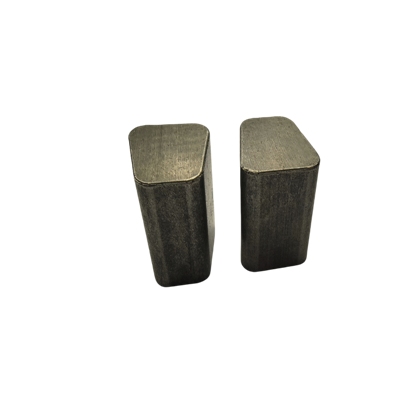
Soft Magnetic Composite
Soft Magnetic Composite(SMC)applicatied to robotic dog joints and axial motor.

NdFeB Magnetic Assembly
With the advancement of multidisciplinary cross-technology, composite devices of bonded NdFeB and metal parts will

Segment Magnets
Segment magnets some time can be called arc magnets.it is a type of permanent magnet made from an alloy of neodymium,

Stator Spacer
Stator spacer,The parts of pole shoes; it is frequently detachable from the pole shank in a large motor.Stator spacer

NdFeB Bonded Magnet Rotors
NdFeB Bonded Magnet Rotors are magnetic device composed of bonded magnet and shaft. Bonded NdFeB magnet rotors are