Recently, Mercedes-Benz released Vision One-Eleven, a pure electric concept car. The biggest significance of this concept car is to show the world a new technology: axial flux motor, which is an important part of the future electrification of Mercedes-Benz. .Recently, Mercedes-Benz released Vision One-Eleven, a pure electric concept car. The biggest significance of this concept car is to show the world a new technology: axial flux motor, which is an important part of the future electrification of Mercedes-Benz.
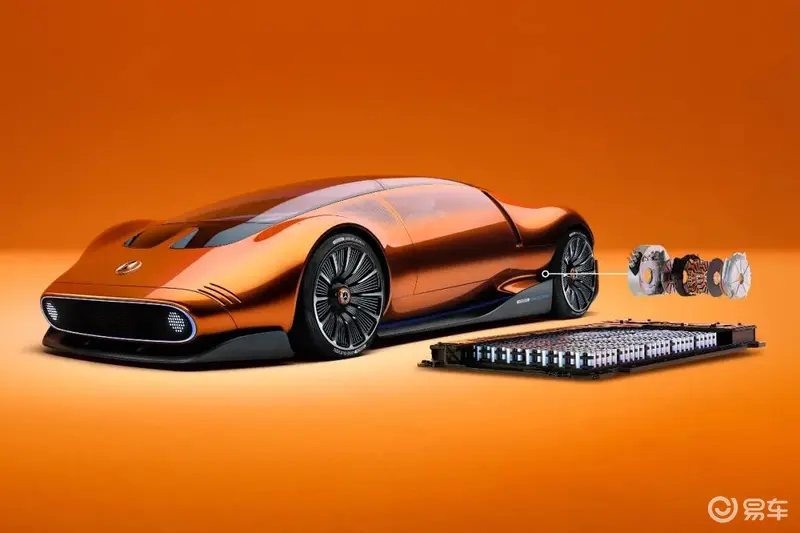
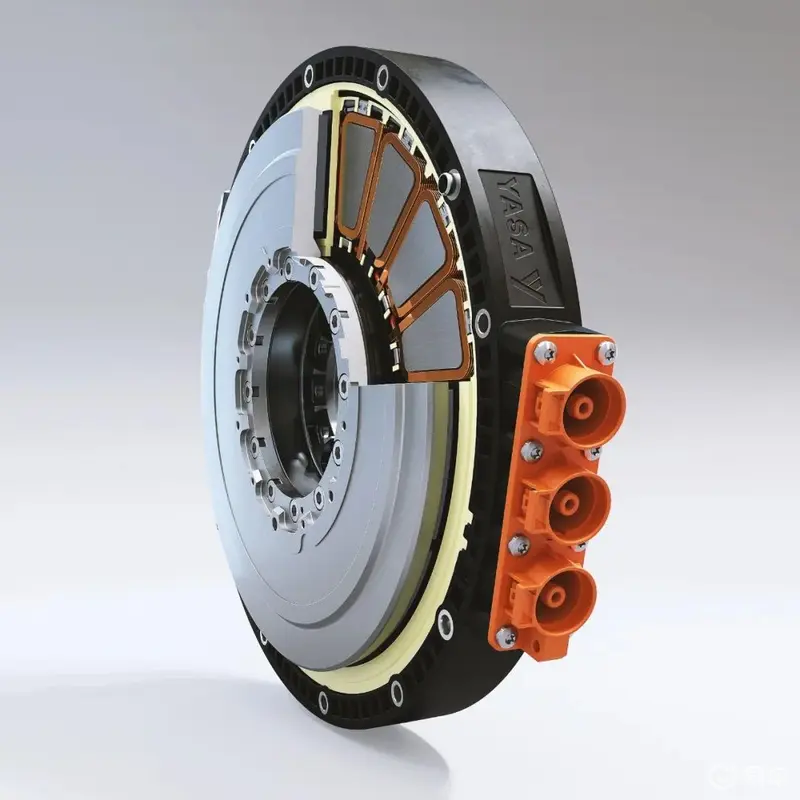
The axial flux motor used by Mercedes-Benz comes from YASA, a British company specializing in this kind of motor, which Mercedes-Benz will acquire in July 2021.
In fact, in 1821, Faraday invented the world's first disc motor, which was actually an axial flux motor, but was limited by materials and techniques. Instead, the radial flux motor invented later was widely used, that is, At present, the motors used in most electric vehicles are radial flux motors.
Old Fa would be delighted to see axial flux motors being brought to the stage today.
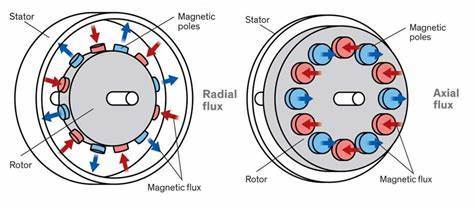
Left: Radial magnetic flux; Right: Axial magnetic flux
Axial, radial refers to the direction of magnetic flux. The radial flux is the direction of the magnetic flux generated by the motor windings that diverges from the motor axis, perpendicular to the motor axis, parallel to the diameter of the disk, and is radial; while the axial flux refers to the direction of the magnetic flux generated by the windings. Parallel to the axis of the motor, it is axial.
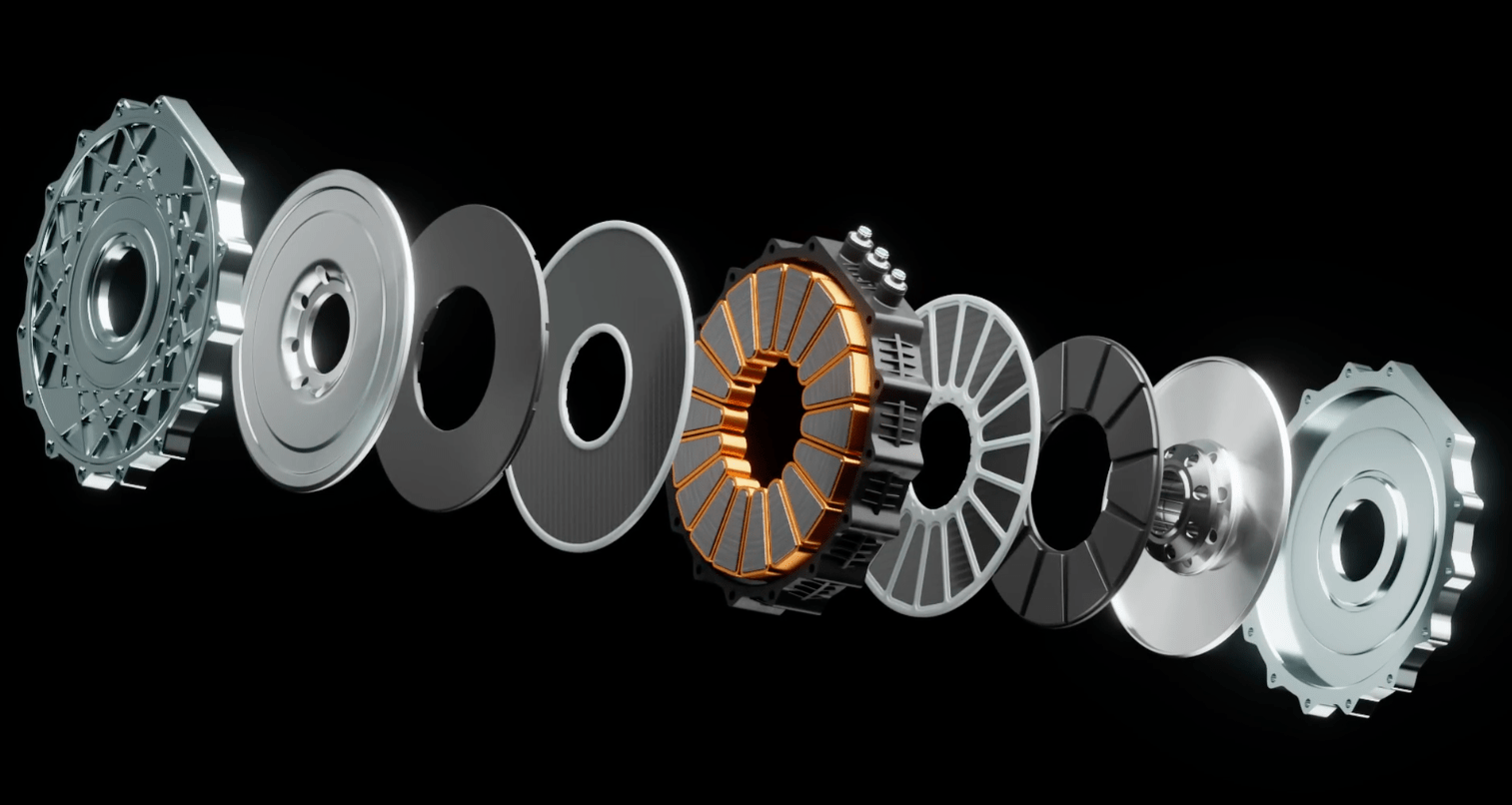
YASA axial flux motor
The core advantage of an axial flux motor is that the rotor has a larger diameter and it spins along the stator rather than inside it. Torque equals force times radius, axial flux motors can achieve more torque with the same force.

Axial flux motors are more efficient
For the same amount of permanent magnets and winding material, axial flux motors can provide a 30% torque density advantage over traditional radial motors . The YASA motor topology also eliminates the stator yoke, reducing stator mass by up to 80%, an innovation that provides a power density advantage of over 30% and a range advantage of 5%.
Accompanied by high performance is high cost and high difficulty. Therefore, at present, the few application fields of axial flux motors are racing cars and high-performance cars, which require high volume and weight but are not sensitive to cost. For example, when Mercedes-Benz bought YASA, the original intention was to use it on AMG models Implement the application.

Ferrari SF90
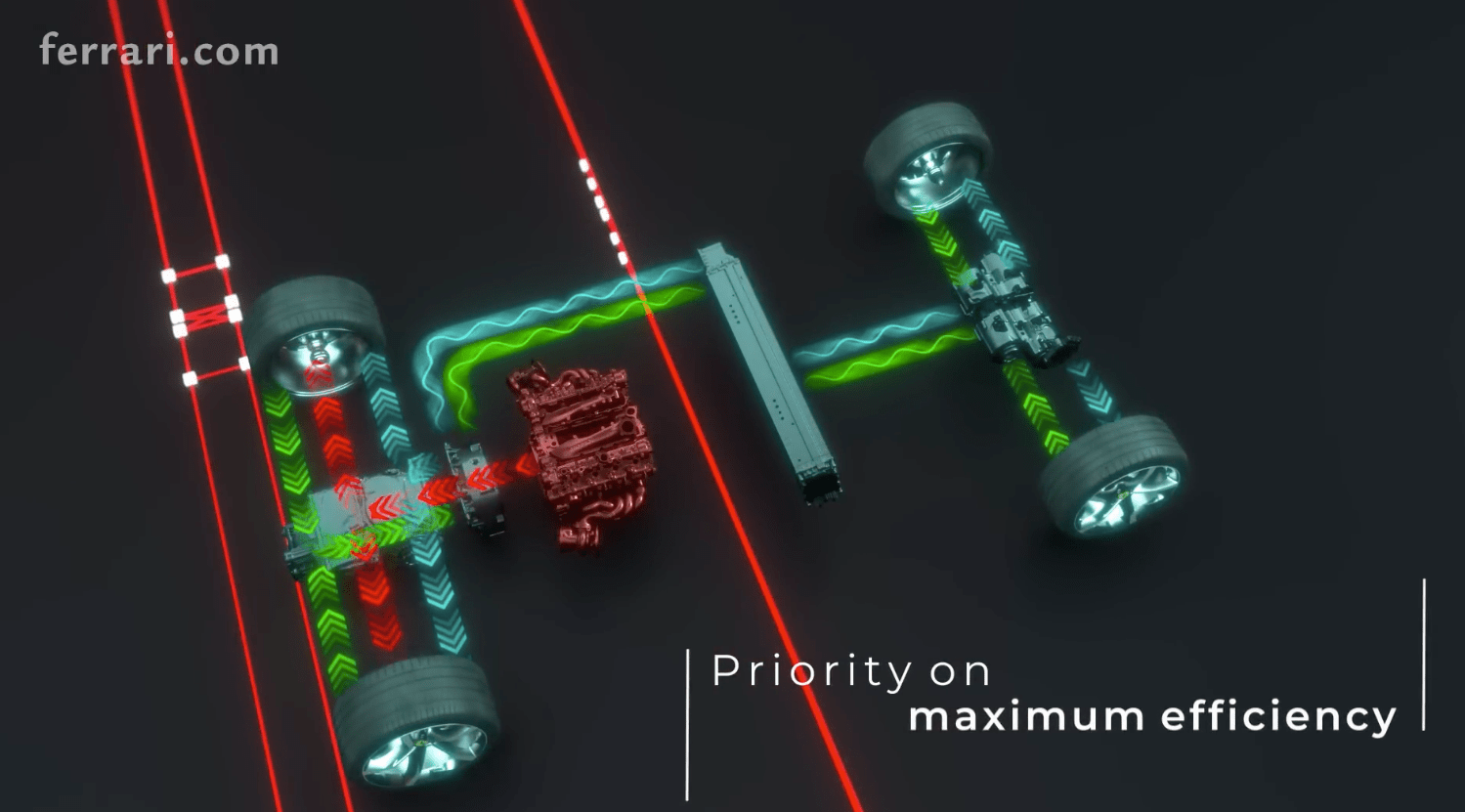
SF90 is equipped with three YASA motors, two in front and one behind
Before being acquired by Mercedes-Benz, the most well-known cooperation case of YASA in the past ten years was the Ferrari plug-in hybrid flagship SF90, equipped with three YASA motors, two of which are located on the front axle, and the other is located in the P2 position between the V8 engine and the gearbox. , the P2 scheme of placing the motor between the engine and the gearbox is also the most suitable scheme for YASA motors for a wide range of applications.
No matter what in the future, the goal is to make it smaller and more efficient. In terms of motors, these are exactly what axial flux motors are good at. Although many aspects are still in the research and conquering stage, However, the axial flux motor must be a new solution that will become popular in the future.
"YASA" technology has many advantages, just like this YASA company chooses this as the core technology of high-density motors. "Rome was not built in a day: In fact, YASA technology is the product of technological evolution, and its evolution path can be roughly divided into three stages: the first
generation product is the traditional RSR structure of the axial magnetic field motor, which is the overall structure with a yoke, and the stator The winding is wound vertically on the teeth. Behind this structure it relies on the "winding" process of silicon steel sheets. In the second generation of products, the size of the stator yoke is compressed to a minimum and is only used as a connection structure for each tooth. The winding It is wound flat on the teeth. The development of this structure depends on the maturity of the SMC stator bonding process . With the help of the isotropic magnetic permeability of the SMC material, it is possible to get rid of the constraints of the silicon steel sheet stamping process and design the most suitable 3D stator structure The space utilization rate has been greatly improved. The third-generation product, namely the "YASA" structure, completely got rid of the "yoke" and maximized the torque density of the motor. In the same way, the development of this structure must be behind the structure\process The product of technological breakthroughs, the core problem of this process is " how to integrate the split stator teeth into a whole ." This is the key technology to be discussed next.
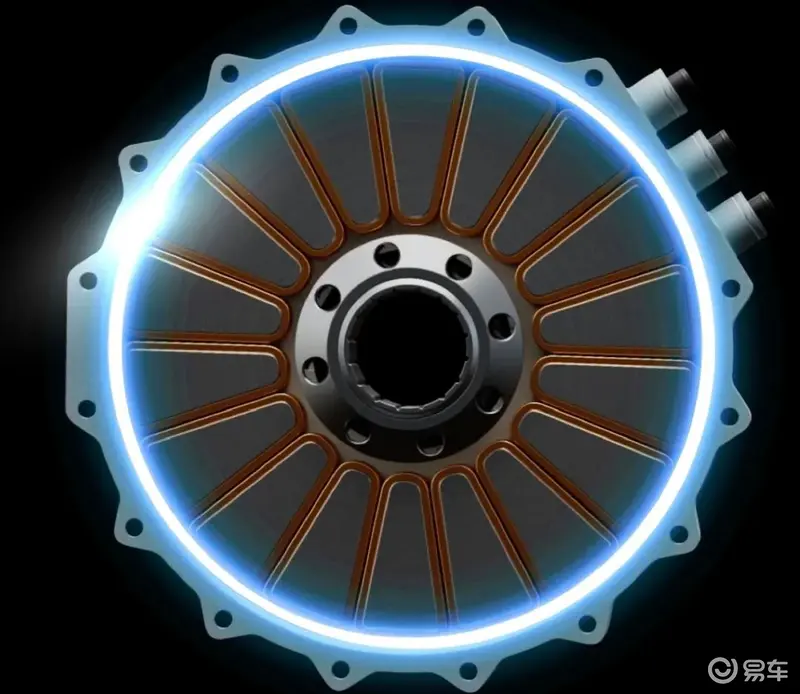


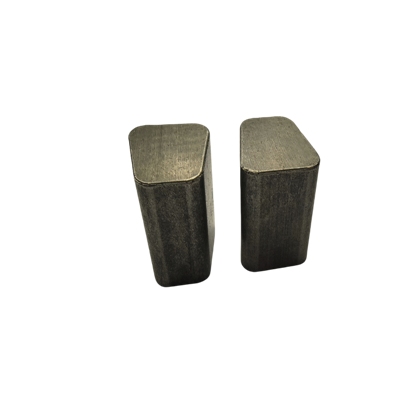
SMC(Sofe magnetic composite)split stator and whole produced by High Mag Technology(ShenZhen)Ltd
Today, the motors manufactured by YASA are the smallest and lightest in their class of performance. This motor uses less material to produce higher torque and power density than comparable motor types.
The topology of the YASA motor eliminates the stator yoke, thereby reducing the weight of the stator iron by up to 80%, which means that the power density of the YASA motor is 2-3 times that of the non-shaft motor.Compared to conventional electric motors, the YASA axial flux method uses less materials such as copper, iron and permanent magnets, which significantly reduces material costs and provides a more environmentally friendly product.
This is the scene where Vision One-Eleven appeared at the beginning.