How does the rice cooker know if the rice is cooked?
Why doesn't the rice cooker know if it's cooked?
1. In fact, the rice cooker does not "know" whether the rice is cooked or not. After jumping to the keep warm state, the rice is not cooked yet, we still need to master the keep warm time by ourselves. The rice cooker uses the principle of the highest temperature of water under normal pressure. As long as the water can convect normally, the temperature at the bottom of the pot will not exceed 100 degrees.
2. When the rice runs out of water, the bottom of the pot begins to heat up over 100°C, the NdFeB permanent magnet loses its magnetism, and the switch action enters the heat preservation state. If you make soup, the rice cooker will not switch to the working state until the soup is boiled dry.
Why does the magnet lose its magnetism?
For ferromagnetic materials, above a certain temperature, the thermal vibration of atoms is too violent and disrupts the original consistent magnetic moment, and the material will transition from ferromagnet to paramagnet. Household rice cookers use the high-temperature degaussing principle of ferromagnets. When the rice in the pot is heated to around 103°C, the magnetism of the ferromagnetic material under the rice cooker decays sharply at high temperatures, and the attraction of the NdFeB permanent magnets after demagnetization is greatly reduced. Thus, the heating switch is automatically disconnected, allowing the rice cooker to enter the heat preservation state, so that the rice can be cooked without being mushy.
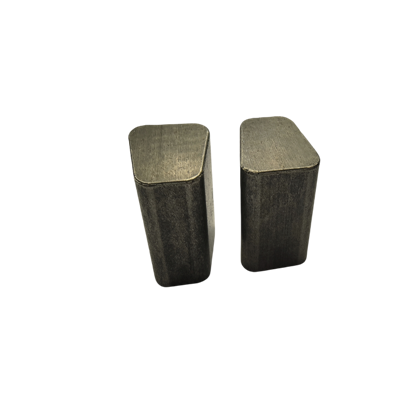
Rice cooker permanent magnet details:
Curie temperature: 370 (°C)
Product name: permanent Magnet disc
Density: 7.3-7.7 (g/cm3)
Remanence: 11.6~12.2(T)
Working temperature: 0-200 (℃)
Material grade: 35UH
Coercivity: ≥10.6 (KA/m)
Intrinsic coercive force: ≥25.0 (KA/m)
Maximum magnetic energy product: 33~36 (KJ/m3)