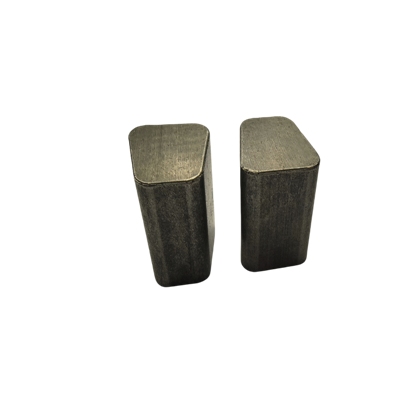
TOKYO -- Japan's Proterial has developed a magnet for electric vehicle motors that requires one-fifth the amount of terbium, a rare earth metal, compared to existing levels.
Currently, terbium is produced mainly in China. With geopolitical risks, stable procurement of terbium over the medium to long term is an issue for many Japanese companies. The new product can reduce the amount of terbium use in the production material phase to help mitigate risks in electric vehicle production.
Terbium is one type of "heavy rare earth", and when added to magnets, it improves heat resistance. Almost all of them are produced in China. Compared with "light rare earths" such as neodymium, which are also used in EV motor magnets, it is difficult to diversify the procurement network.
According to Proterial, ordinary neodymium magnets for EV motors contain about 0.5 to 1% of terbium. The recently successfully developed technology can reduce the amount of terbium to about 0.1-0.2%, and it will not affect the performance of the magnet. A small amount of terbium can also improve the heat resistance of the magnet by adjusting the composition in the fine particle layer of the magnet.