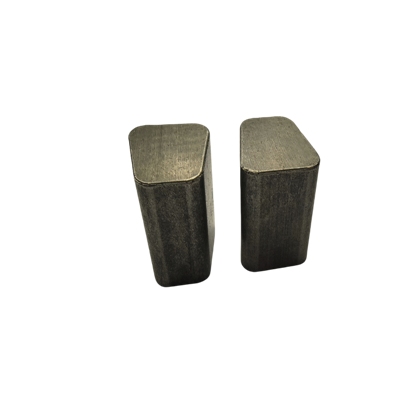
What is magnetization? How to realize 2-pole and multipole magnetizing respectively?
What is "magnetization"?
When you imagine magnets, the image that comes to mind is that they "stick to iron", but in fact, they won't stick to iron from the beginning. When the magnetic material is processed, the magnet is nonmagnetic, and the process of making this nonmagnetic magnet magnetic is called "magnetization" or "magnetization".

What are the magnetizing methods?
1. Contact magnetization method:
In the contact magnetization method, a magnetized strong magnet (usually a permanent magnet) is brought into direct contact with the magnet to be magnetized. Through contact, the magnetic materials are rearranged in a strong magnetic field and obtain magnetism.
2. Vibration magnetization method:
In the vibration magnetization method, the magnet is placed in a specific device, which vibrates at a specific frequency and amplitude. This vibration will make the magnetic materials of the magnet arrange in the vibration, thus realizing magnetization.
3. Electromagnetic magnetization method:
In the electromagnetic magnetization method, the magnet is placed in a solenoid coil. The solenoid is a hollow cylinder, and magnets with different sizes and shapes can be placed in it. The coil is energized to generate a strong magnetic field, which will magnetize the magnetic material to maintain magnetism. Electromagnetic magnetization method uses powerful electromagnetic coil to generate high-intensity magnetic field. By adjusting current and coil design, higher magnetic field intensity and greater magnetization effect can be achieved. This method is widely used in industrial production.
What device is needed for industrial magnetization?
Usually need to prepare: ① magnetizing power supply (magnetizer), ② magnetizing fixture (coil), ③ cooling device (ice water machine), ④ Gauss meter (measuring device).

What materials can be magnetized?
Magnets that can be magnetized are called "permanent magnets" or "permanent magnets" for short, and some people call them "hard magnets".
Permanent magnet: Common permanent magnets can be divided into two categories: 1. Metal alloy magnets: neodymium magnet, Sm-Co magnets and Al-Ni-Co magnets; 2. Ferrite permanent magnet materials.
Soft magnetic: Magnets that cannot be magnetized are called "soft magnetic" materials.
After the soft magnetic material is magnetized, when the magnetizing magnetic field disappears, the residual magnetic field is very small or disappears with it. Common ones are: soft ferrite, amorphous, pure iron (soft iron), silicon steel, iron-nickel alloy and so on.


What is the principle of magnetization?
The principle of magnetization is based on the law of electromagnetic induction and ampere law. The current pulse generates a strong magnetic field in the coil, which permanently magnetizes the hard magnetic material placed in the coil. The peak value of pulse current is very high when the magnetized electromechanical container works, which requires the capacitor to withstand impulse current. The magnetizer has a simple structure and is actually an electromagnet with strong magnetic force.

Why is magnetization directional?
The magnetization direction is the first step for neodymium magnet, samarium cobalt permanent body and other materials to obtain magnetism. It represents the position of N pole (North Pole) and S pole (South Pole) in a magnet or magnetic component. The magnetism of permanent magnetic materials mainly comes from its easily magnetized crystal structure, which we call "magnetic domain". The interface between domains is called domain wall. Generally, macroscopic objects always have many magnetic domains. In this way, the directions of magnetic moments of the magnetic domains are different, and the results cancel each other out. The vector sum is zero, and the magnetic moment of the whole object is zero, so it cannot attract other magnetic materials. That is to say, magnetic materials do not show magnetism to the outside under normal circumstances. Only when a magnetic material is magnetized can it show magnetism to the outside. .
How are magnetized 2 poles and multipoles realized respectively?
1. Two-pole magnetizing: hollow coil (as shown in the figure below) is also called solenoid. In engineering, the number of coils is generally 5-30 turns, the magnetic conductor is generally industrial pure iron, the coil current is generally tens to hundreds of amperes, and the magnetic circuit length is generally several centimeters or tens of centimeters. The specific parameters should be reasonably selected according to the magnetizing equipment, the overall size of the magnetized product and the number of magnetic poles to achieve the ideal effect.


2. Multipole magnetization:
Use specific coils: ① close to the outer diameter of the permanent magnet (outer periphery multipole), ② close to the inner diameter of the permanent magnet (inner diameter multipole), ③ close to the end face of the permanent magnet (planar multipole), ④ Helbeck array magnetization (using two poles to magnetize and then splicing and assembling the permanent magnets to form a special combination of concentrated magnetic fields).


What are the magnetizing conditions?
The magnetizing conditions of permanent magnet materials include magnetizing voltage, magnetizing current, magnetizing time and other indicators. The correct setting of these indicators has an important impact on the performance and life of magnetic steel or permanent magnet motor.
1. Constant current magnetizing: This method is suitable for low coercivity magnets, such as ferrite magnets. The realization principle is to discharge through low-voltage and large-capacity capacitors.
2. Pulse magnetizing: This method is suitable for magnets with high coercivity, such as neodymium magnet. The realization principle is that the coil generates a short-term super-strong magnetic field through high-voltage and small-capacity capacitor discharge.

How to define whether magnetization is saturated or not?
How to judge whether the workpiece is saturated after magnetizing? Generally, it is the magnetic data of the measurement table. If there is a big gap with the theoretical data, it is considered that there is no saturation of magnetization. In actual operation, the voltage is adjusted to the required energy of the magnet brand to try magnetizing. After the magnetization is completed, the magnetic field intensity, that is, the surface magnetism of the magnet, is detected by a magnetic measuring instrument. Or measure the magnetic flux of the magnet, write down the magnetizing data, then increase the electric voltage and magnetize for the second time. After magnetizing, test the magnetism to see if the magnetic field strength has increased. If the magnetic field strength has not increased after increasing the voltage, it means that the magnet has been magnetized and saturated.
Some rare earth magnets require a very high magnetization field in the range of 20 to 50 KOe. These magnetic fields are difficult to generate, and need high-power power supply and well-designed magnetizing devices. Isotropic bonded neodymium materials need a magnetic field in the high range of 60 KOe to be completely saturated. However, the field in the range of 30 KOe can reach 98% saturation. Ferrite magnets need a magnetic field in the order of 10 KOe, while Al-Ni-Co alloys need a magnetic field in the range of 3 KOe to be saturated. Because Al-Ni-Co can be easily demagnetized unintentionally, it is best to magnetize this material before or even after the magnet is finally assembled into the equipment.