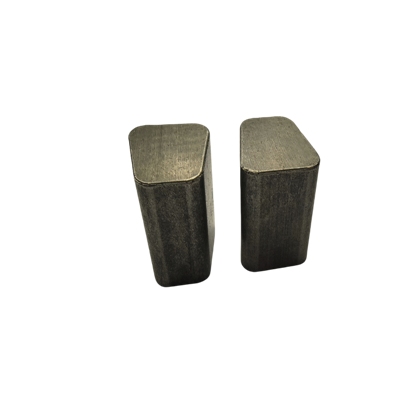
Musk launched the Tesla Bot prototype Optimus (Optimus Prime). Optimus Prime has a total of 40 motors, including 12 on the arms, 12 on the hands, 12 on the legs, 2 throats, and 2 torso. Humanoid robots have high requirements for size, weight, and driving accuracy, small and many movable joints, and fast response speed. High-performance NdFeB is an essential material to support its high-efficiency performance. 40 motors, each with different weight, if the demand for NdFeB is 50-100g/one, the demand for NdFeB for a humanoid robot is 2-4 kg.
Musk has never been stingy with admiring the humanoid robot in public. He has repeatedly stated that the humanoid robot project has become Tesla's latest priority, even taking away a lot of resources from the Autopilot and FSD teams. Over time, "it will have bigger potential than the auto business.
The first version of the robot is expected to enter production in 2023. If "Optimus Prime" can be mass-produced in the next two years, its cost will be lower than that of a car under the scale effect, and the estimated price is 25,000 US dollars.
In addition, Chinese robot manufacturer Inspire Robots exhibited its bionic manipulator at the Mechanical Elements Technology Exhibition held in Tokyo, Japan on June 23, 2023.
Rare earth permanent magnets (mainly used in motors) are important subdivided materials in the upstream of the robot link, and the permanent magnets required for humanoid robot motors are mainly NdFeB. As the third generation rare earth permanent magnet material, NdFeB permanent magnet has the characteristics of small size, light weight and strong magnetism. It is called "Magnetic King" because of its excellent performance. Robots may open a new window for NdFeB demand, and the demand increase may exceed 20,000 tons by 2025