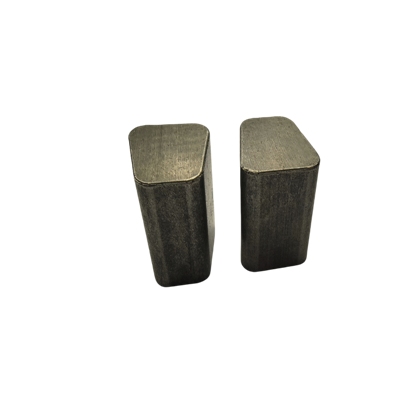
Magnetic materials refer to materials composed of ferromagnetic substances, which are the main materials in motors, electrical appliances, electronics, electroacoustics, optics, and instrumentation. Magnetic materials can be divided into two categories: soft magnetic materials and hard magnetic materials according to different properties. This article mainly introduces the advantages and disadvantages of several commonly used magnets, mainly 5 kinds, namely ferrite magnets, NdFeB magnets, SmCo SmCo, AlNiCo AlNiCo, and rubber magnets.
Introduction to the advantages and disadvantages of different types of magnets
1. Ferrite
Advantages: low price, good temperature characteristics, corrosion resistance, good performance-price ratio.
Disadvantages: weak magnetic force, fragile and easy to drop corners.
2. NdFeB
Advantages: high magnetic performance, medium price, good strength, easy to process into special shapes.
Disadvantages: Not resistant to high temperature and corrosion, fragile.
3. Samarium Cobalt
Advantages: high heat resistance, good temperature stability, corrosion resistance.
Disadvantage: higher price
4. AlNiCo AlNiCo
Advantages: excellent temperature characteristics, corrosion resistance, poor interference resistance.
Disadvantage: easy to be magnetized (demagnetized)
5. Rubber magnets
Advantages: flexible, can be folded, can be cut, corrosion-resistant.
Disadvantages: The magnetic force is very weak, and the magnetic force begins to decline at 100 °C.